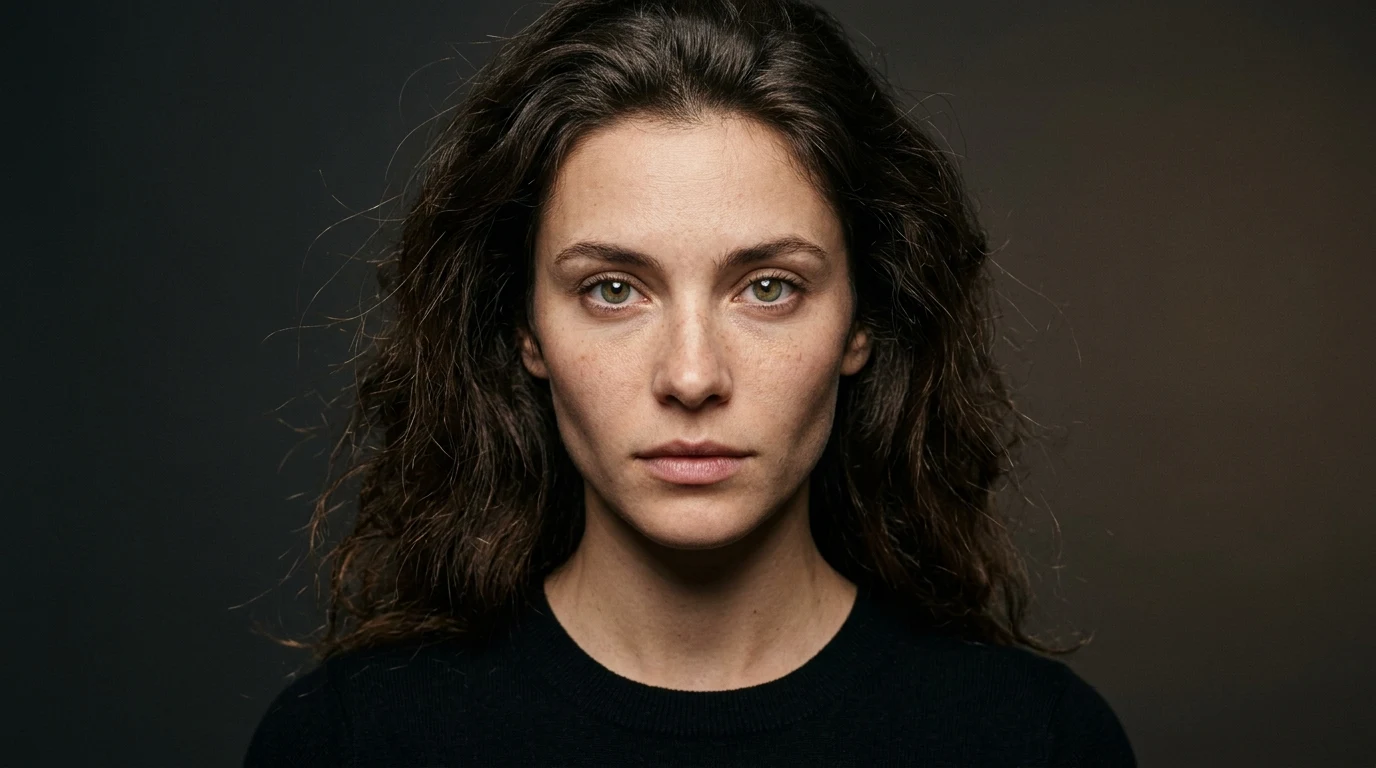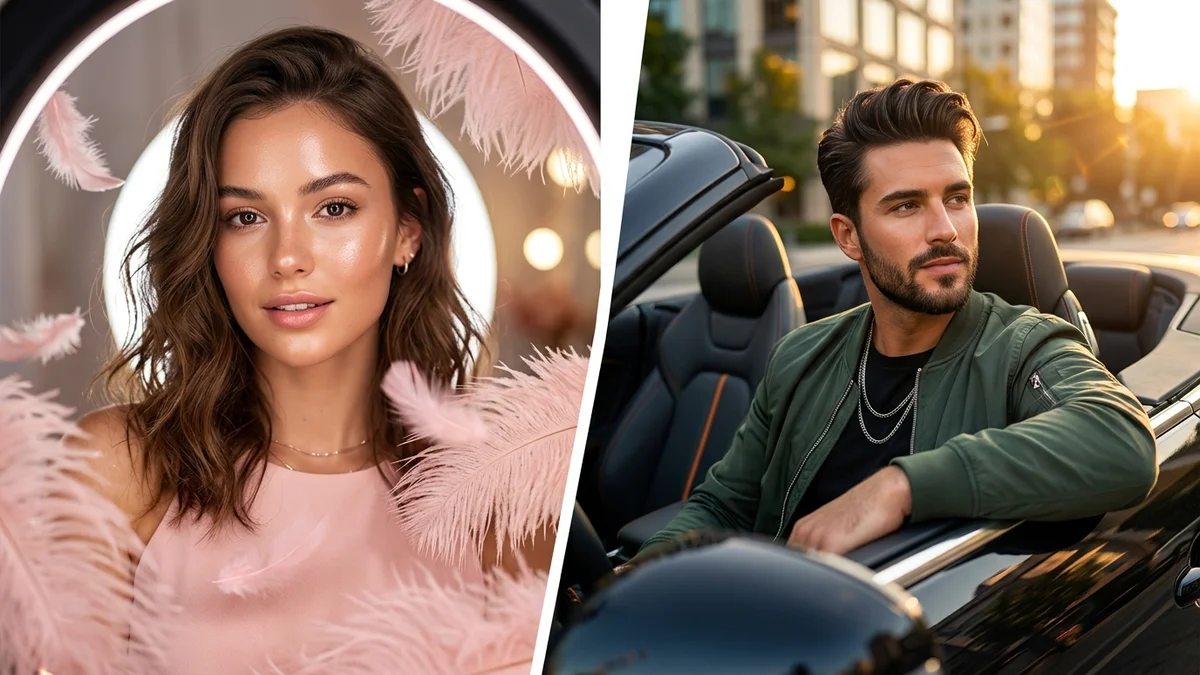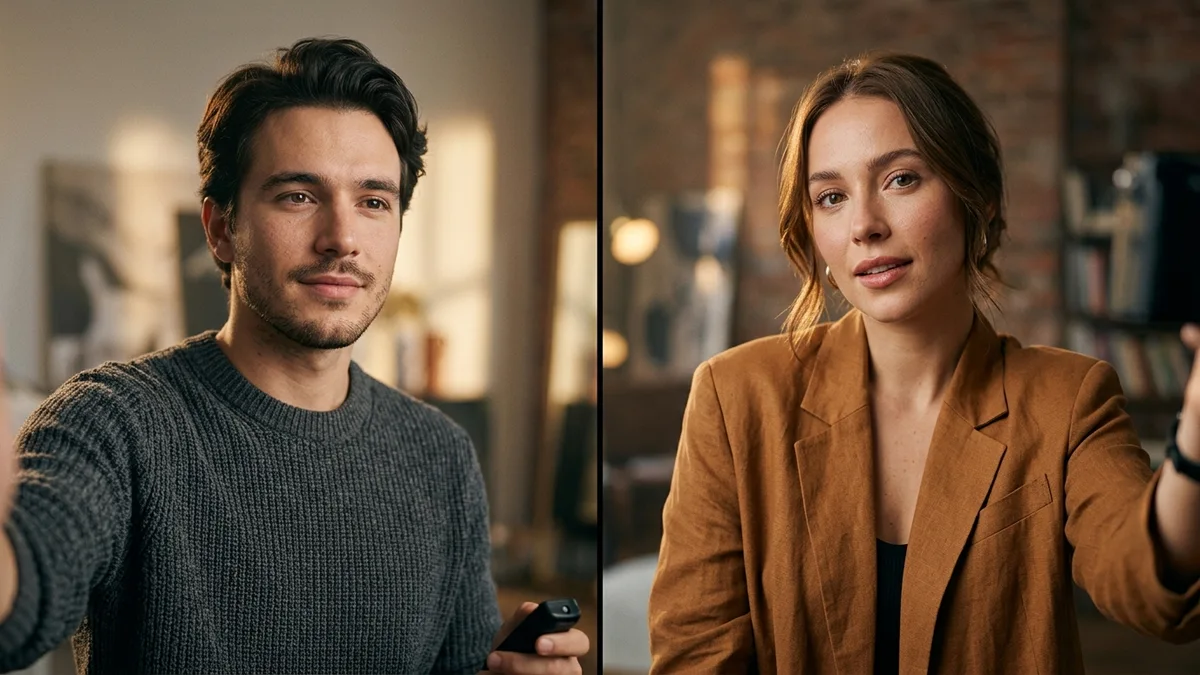

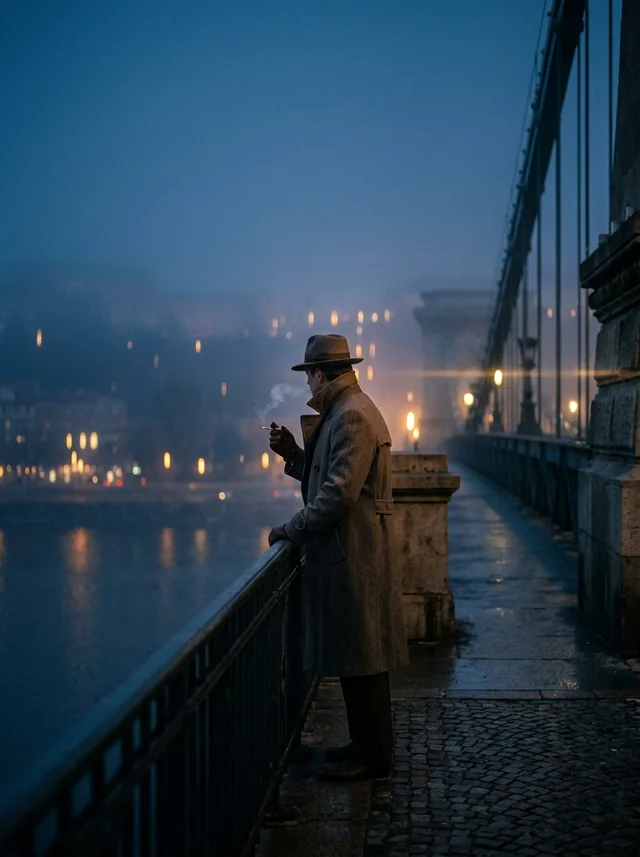
Crafting a compelling cinematic photo prompt requires significantly more precision than typing generic buzzwords like "hyperrealistic 8K movie still" into an AI generator. Modern neural engines like ChatGPT DALL-E 3, Google Gemini Imagen 3, and Midjourney v6.1 respond directly to the physics of real cinema cinematography. To transform a flat, digital-looking AI render into an atmospheric, emotionally gripping still, your prompt must engineer light direction, optical glass compression, volumetric atmosphere, and authentic analog film stock behavior.
Whether you need a moody cinematic photo prompt for men with dramatic chiaroscuro shadows, a golden hour cinematic photo prompt for boys on urban rooftops, an intimate 35mm cinematic photo prompt for couple romance in rainy Paris, or specialized formulas for cinematic photo prompt for chatgpt and cinematic photo prompt for gemini ai, the curated lookbooks below provide production-tested copy-and-paste formulas. Each entry includes complete lighting ratios, camera simulations, and prompt engineering breakdowns.
Tokyo Neon Alley Rain: Moody 35mm Cinematic Photo Prompt for Men
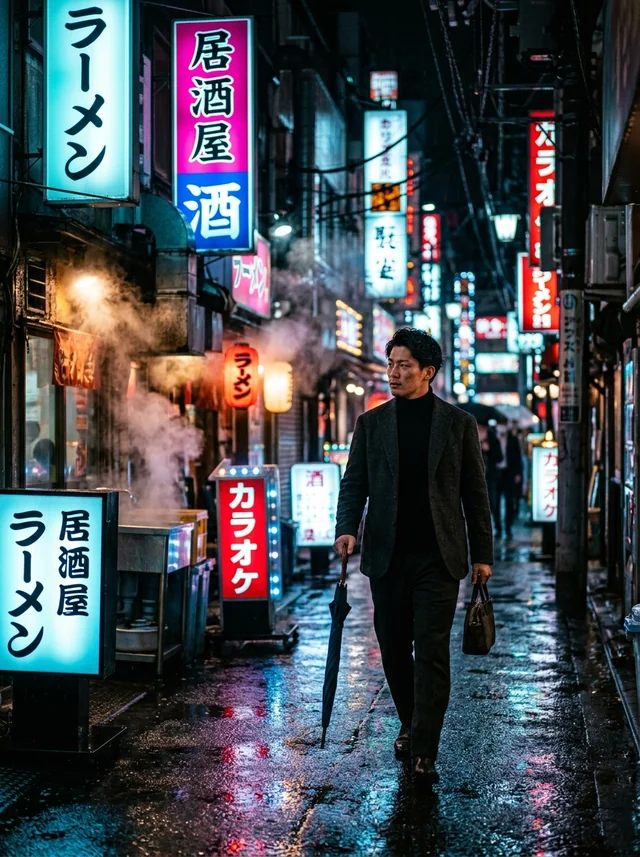
This formula leverages the high dynamic range of an ARRI Alexa paired with Cooke Anamorphic optics. In cinematic photography, wet pavement acts as a giant natural mirror that bounces vibrant neon highlights back into the foreground, eliminating harsh shadows while maintaining dramatic low-key contrast. Specifying atmospheric steam creates volumetric depth between your subject and the background cityscape.
Brooklyn Sunset Rooftop: Golden Hour Cinematic Photo Prompt for Boys
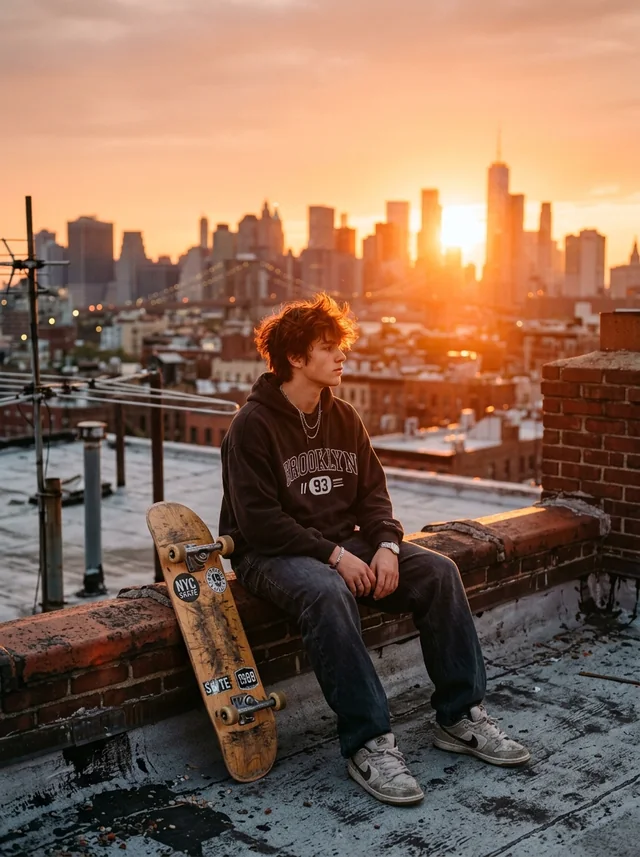
Golden hour backlight creates an organic rim light halo around the subject hair and shoulders, visually separating them from the distant urban skyline. Kodak Portra 400 emulation introduces warm amber midtones and a fine grain structure that prevents the AI from rendering artificial plastic textures on young skin.
Paris Dusk Cobblestone: Filmic 35mm Cinematic Photo Prompt for Couple
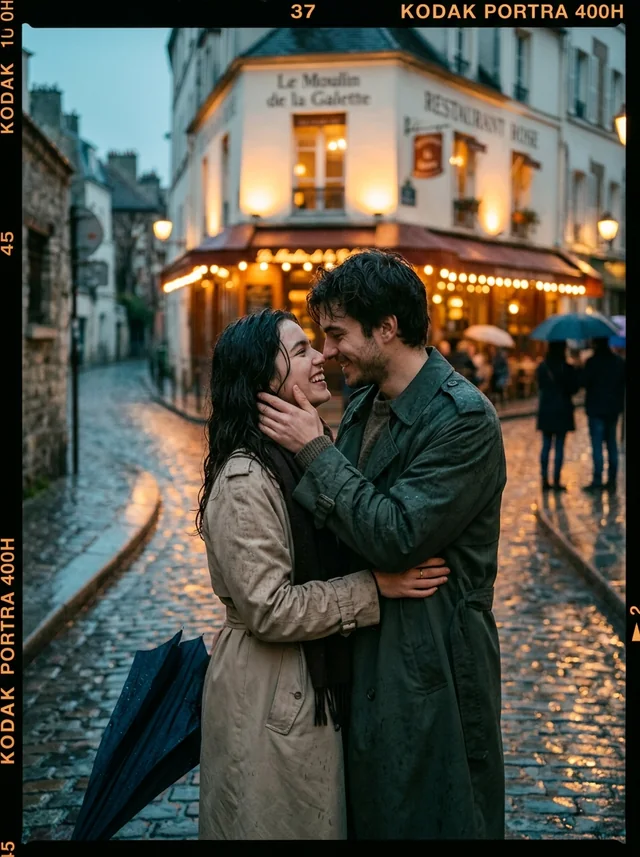
Pairing the natural cool tones of twilight blue hour with warm tungsten cafe interior lighting produces a classic complementary color palette (cool cyan vs warm amber). The Leica Summilux 50mm wide aperture yields creamy background falloff while preserving crisp textile definition across both trench coats.
Cyberpunk Rain Detective: Dystopian Sci-Fi Cinematic Photo Prompt for ChatGPT
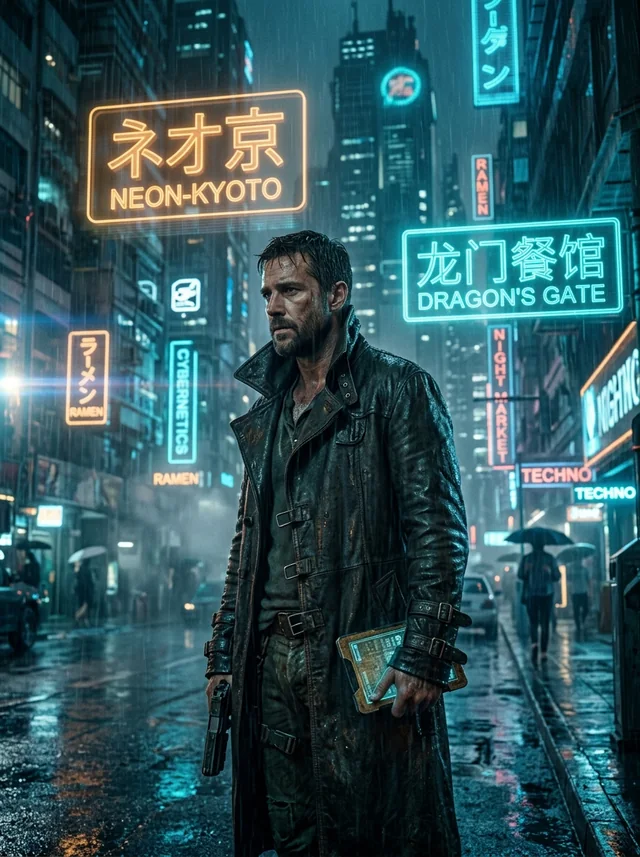
Panavision 65mm optics deliver optical facial compression and dramatic cinematic anamorphic flares without distorting facial proportions. Prompting for distressed leather and physical rain streaks forces ChatGPT to calculate light reflections across organic and metallic textures simultaneously.
California Coastal Highway: Vintage 1970s Kodachrome Cinematic Photo Prompt for Gemini AI
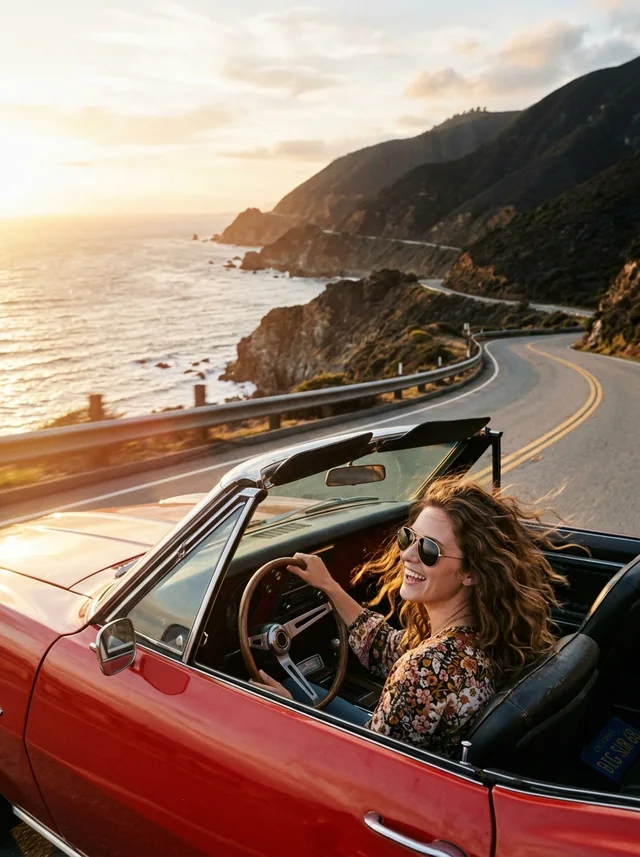
Kodachrome 64 is legendary for its vibrant reds, earthy browns, and deep warm sky gradients. In Gemini AI Imagen 3, calling for authentic 1970s road trip aesthetics and windswept hair physics produces dynamic motion blur in the background while keeping the subject crisply focused.
Heritage Roadster Camel Coat: Classic Cinema Chiaroscuro for Men
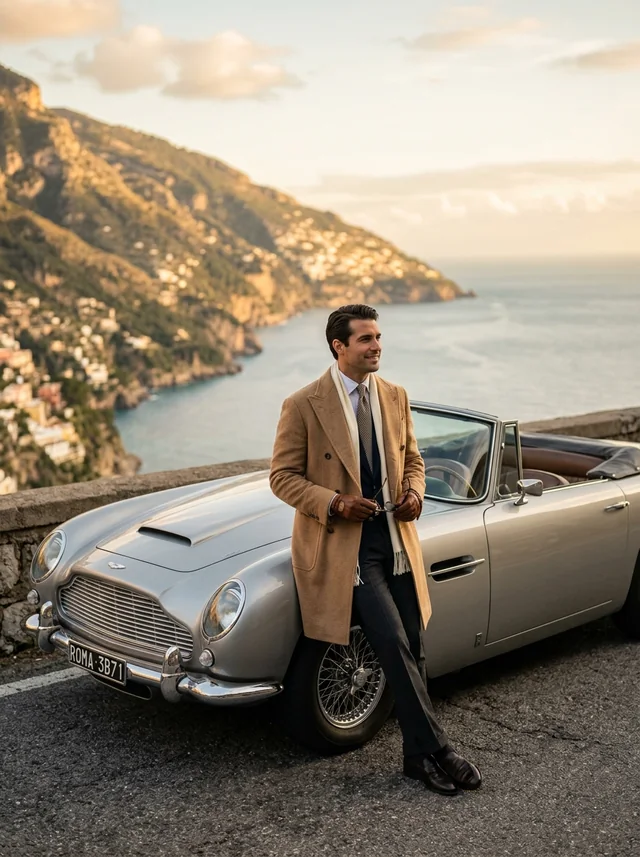
Low-angle raking sunlight sculpts masculine facial planes through natural chiaroscuro. The medium-format Hasselblad 500C/M setup with Carl Zeiss glass renders razor-sharp micro-contrast across camel wool fibers while casting long cinematic shadows across the leaf-strewn road.
Saharan Dune Nomad: High-Dynamic Sandstorm Cinematic Photo Prompt for Boys
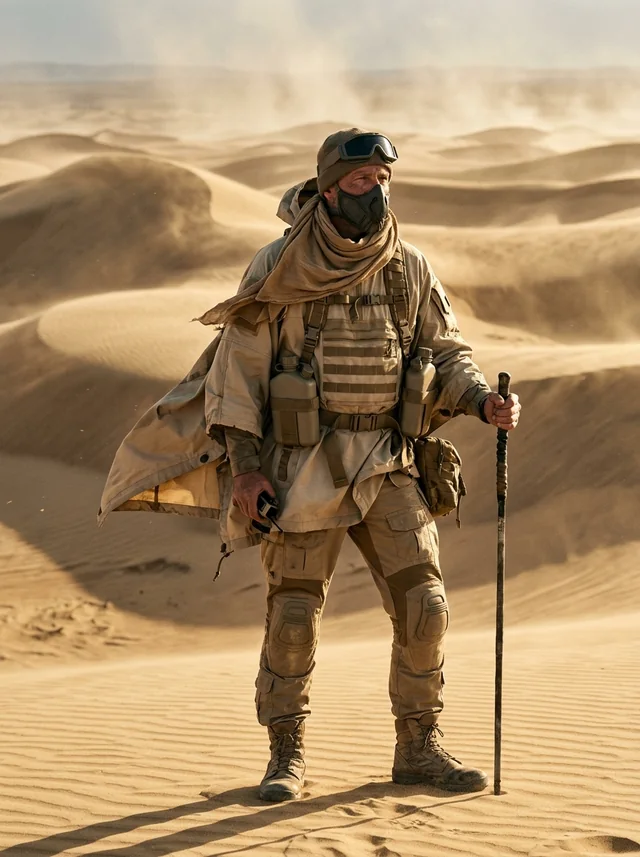
Volumetric dust particles catch direct sunlight to produce an authentic cinematic haze that blurs the harsh horizon into a golden gradient. Layered tactile fabrics give the AI clear structural anchors to generate authentic cloth physics and wrinkles rather than generic flat patterns.
Dark Academia Oxford Library: Moody Chiaroscuro Cinematic Photo Prompt for Boys
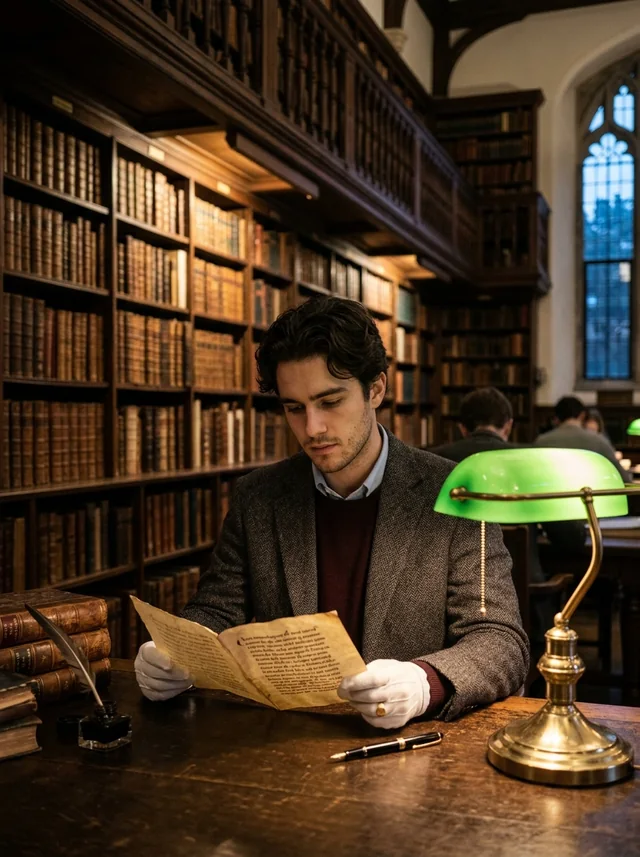
Rembrandt lighting creates a distinct inverted triangle of light on the shadowed cheek, instantly communicating intellectual depth and narrative tension. Gothic architectural elements like carved dark wood and leather book bindings ground the frame in historical cinematic weight.
Neon Night Market: Atmospheric Cyber Street Cinematic Photo Prompt for ChatGPT
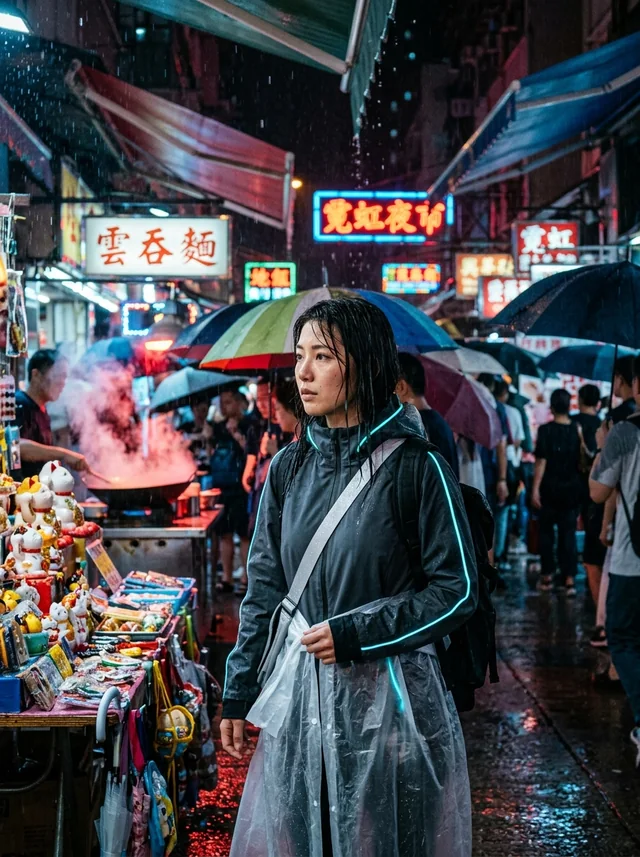
Sony FX9 cinema camera emulation guarantees rich low-light sensitivity without digital color noise. Swirling culinary steam diffuses harsh point-source LED lights into soft cinematic halos, creating an immersive sense of humidity, aroma, and crowded street vitality.
First-Class Twilight Sky: Quiet Luxury Cinematic Photo Prompt for Gemini AI
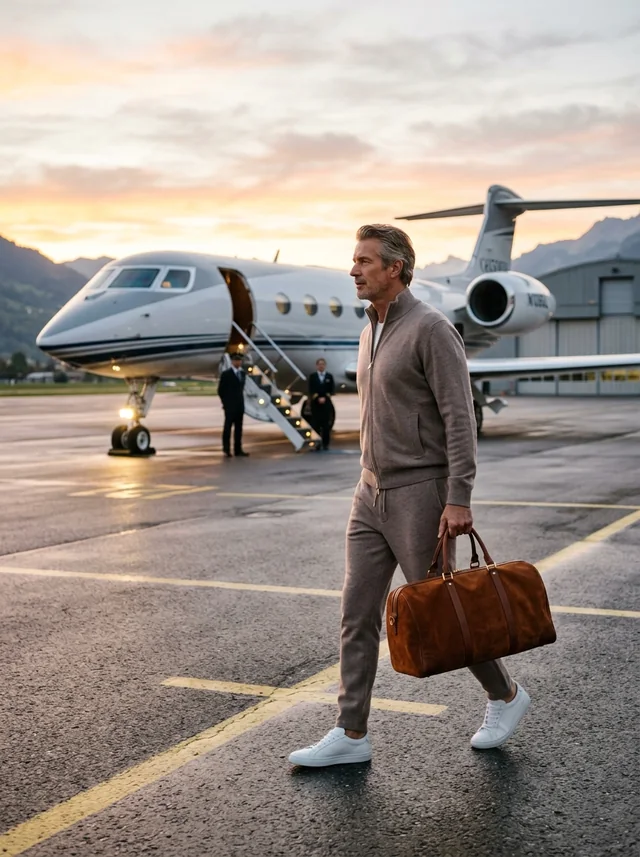
The Leica APO-Summicron optic is celebrated in cinematography for its apochromatic color correction, ensuring zero chromatic aberration along the high-contrast transition between the illuminated cabin interior and the deep twilight sky outside.
Anatomy of a True Cinematic Photo Prompt
The difference between an ordinary digital picture and a cinematic frame lies in storytelling through technical parameters. Cinema directors of photography (DOPs) carefully orchestrate every element within the frame. When prompting an AI, you are effectively serving as the cinematographer. Here are the four foundational pillars that define photorealistic cinema prompts:
1. Optical Glass Physics and Anamorphic Compression
Spherical lenses render straight lines uniformly, whereas anamorphic cinema lenses (such as Cooke Anamorphic or Panavision C-Series) squeeze the image horizontally onto the sensor. This produces distinctive oval-shaped background bokeh, subtle horizontal streak flares, and natural optical barrel distortion towards the edges of the frame. In your prompts, always mention optical focal lengths (such as 35mm, 50mm, or 85mm prime) rather than digital zoom instructions.
2. Volumetric Depth and Particulate Lighting
Movie sets constantly use atmospheric haze, steam, and smoke machines. In computer graphics and AI rendering, light passing through atmospheric particles creates volumetric light rays (God rays). By including terms like "atmospheric morning mist", "steaming manhole vapor", or "illuminated dust motes", you force the model to render three-dimensional space between your character and the backdrop.
3. Directional Lighting Ratios (Chiaroscuro & Rembrandt)
Flat, front-facing flash lighting kills cinematic mood. Instead, demand directional light:
- Rembrandt Lighting: A 45-degree key light that leaves a subtle triangle of illumination on the shadowed cheek.
- Chiaroscuro: Strong, stark contrast between bright focal highlights and deep, velvety black shadows.
- Rim / Edge Lighting: A backlight positioned behind the subject to outline hair and shoulders, visually separating dark silhouettes from deep backgrounds.
How to Get Cinematic Quality in ChatGPT (DALL-E 3)
ChatGPT DALL-E 3 possesses extraordinary semantic comprehension but has a tendency to default to hyper-smooth, airbrushed textures when given simplistic prompts. To overcome this tendency and achieve photorealistic film grain in ChatGPT:
- Ban Retouching Terms: Explicitly write: "Natural, unretouched 35mm film photograph. Do not smooth skin. Preserve visible pores, micro-textures, and fine analog grain."
- Specify Color LUTs: Use precise color grading instructions like "muted Kodak Portra 400 color science, desaturated olive greens, warm skin undertones, soft roll-off in highlights."
- Anchor Shutter Behavior: Adding "subtle 180-degree motion blur on background pedestrians with crisp tack-sharp focus on subject eyes" prevents the entire image from appearing uniformly frozen.
Calibrating Cinematic Prompts in Gemini AI (Imagen 3)
Google Gemini Imagen 3 excels at realistic facial expressions, authentic natural lighting, and nuanced atmospheric detail. To get the best cinematic output from Gemini:
- Use Descriptive Storytelling Sentences: Gemini processes context best when you describe the emotional tone of the scene (e.g., "An introspective, lonely moment after a sudden rain shower on a neon-lit avenue").
- Define Aspect Ratios in Natural Language: Request "widescreen cinematic framing" or "vertical 3:4 portrait orientation" directly in the text.
- Contrast Temperature Pairing: Gemini renders stunning lighting when you combine two opposing light sources in the prompt, such as cool exterior twilight and warm interior tungsten lamp glow.
Cinematic Benchmark: Midjourney v6.1 vs ChatGPT vs Gemini AI
5 Costly Mistakes to Avoid in Cinematic AI Prompts
- Mistake 1: Stacking Hollow Buzzwords: Words like "photorealistic", "8k unreal engine", and "octane render" actively damage output quality in modern models. Instead, name real cinema gear: ARRI Alexa, Panavision, Cooke Anamorphic, or Leica Summilux.
- Mistake 2: Missing the Key Light Direction: If you do not specify where light originates (window, streetlamp, neon sign, rim light), the AI illuminates the subject evenly from the front, destroying all cinematic mood.
- Mistake 3: Neglecting Background Atmosphere: A subject standing in empty darkness feels artificial. Always ground your frame with atmospheric elements like wet pavement reflections, distant bokeh traffic, or morning fog.
- Mistake 4: Overlooking Color Temperature: Great cinematographers rarely use monochromatic lighting. Combine warm tungsten light (2700K) with cool ambient daylight or neon blues (6500K) to create depth.
- Mistake 5: Using Default 1:1 Square Framing: Feature films are shot in wide or vertical portrait compositions. Always dictate
--ar 3:4or--ar 16:9to allow the environment room to breathe.
Frequently Asked Questions
What makes a photo prompt truly cinematic in AI?
A cinematic photo prompt specifies physical camera optical gear (like ARRI Alexa, Panavision 65mm, or Leica M11), anamorphic focal lenses, precise lighting ratios (such as chiaroscuro, Rembrandt, or volumetric mist), and color grading aesthetics (like teal and orange, or Kodak Portra 400) rather than generic keywords like 8K or photorealistic.
How do I get cinematic photo prompt results in ChatGPT without cartoon skin?
Instruct ChatGPT specifically: "Do not apply digital airbrushing or skin smoothing. Ensure realistic skin pore micro-texture and organic cinematic grain. Avoid words like hyperrealistic and instead name specific analog film stocks like Kodak Portra 400 or Tri-X 400."
Can I use these cinematic photo prompts directly in Gemini AI?
Yes. Google Gemini Imagen 3 follows natural conversational English and filmic terminology with high fidelity. Paste the prompt text into Gemini without Midjourney parameter tags for stunning movie still outputs.
What is the best aspect ratio for cinematic photo prompts?
For widescreen movie stills, use 16:9 or 2.39:1 (--ar 16:9 or --ar 21:9). For mobile lookbooks and Instagram editorial formats, 3:4 or 4:5 (--ar 3:4) provides optimal portrait framing while preserving cinematic anamorphic bokeh.
Which AI model produces the best cinematic photo prompts?
Midjourney v6.1 and FLUX.1 Pro produce the highest optical coherence and cinematic lighting contrast. Gemini Imagen 3 excels at photorealistic human expressions, while ChatGPT DALL-E 3 follows complex narrative multi-element instructions best.