
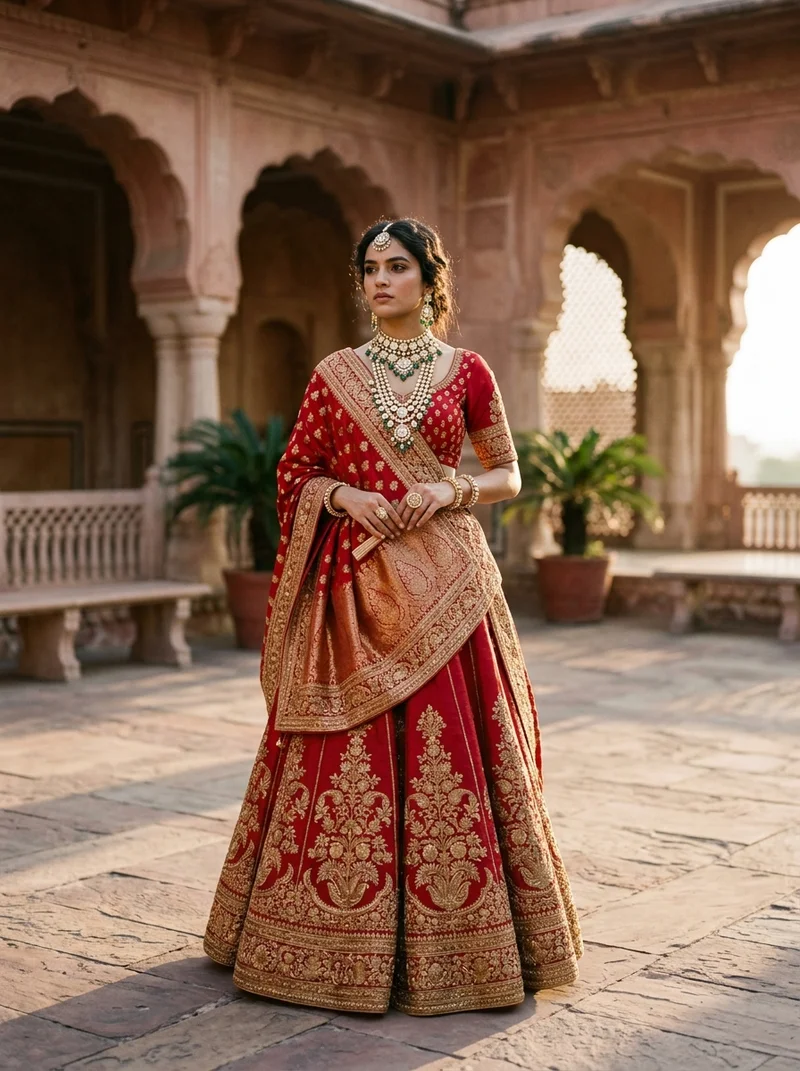
Generating realistic indian traditional fashion ai prompts requires navigating one of the most culturally nuanced visual domains in generative artificial intelligence. While generic search terms like indian traditional dress ai prompt produce cartoonish, plastic-textured costumes with distorted patterns, professional prompt engineering unlocks the rich tactile depth of Indian handloom heritage. When calibrated with precise architectural backdrops, historic weave techniques, and heritage jewelry vocabulary, modern diffusion models like Midjourney v6.1 and FLUX.1 Pro produce magazine-grade editorial lookbooks indistinguishable from luxury Vogue India fashion spreads.
From opulent Banarasi silk sarees with genuine metallic gold zari to royal Rajasthani bridal lehengas adorned with hand-placed real mirror work, each of the ten prompt formulas below is tested for fabric fidelity, authentic drapery, and cultural accuracy. Whether you are designing conceptual collections for a contemporary ethnic wear label, creating festive marketing campaigns, or building an AI fashion portfolio, these calibrated royal ethnic wear midjourney prompts provide complete control over garment silhouettes, fabric micro-textures, and cinematic ambient illumination.
1. Royal Crimson Banarasi Silk Saree with Antique Gold Zari Brocade
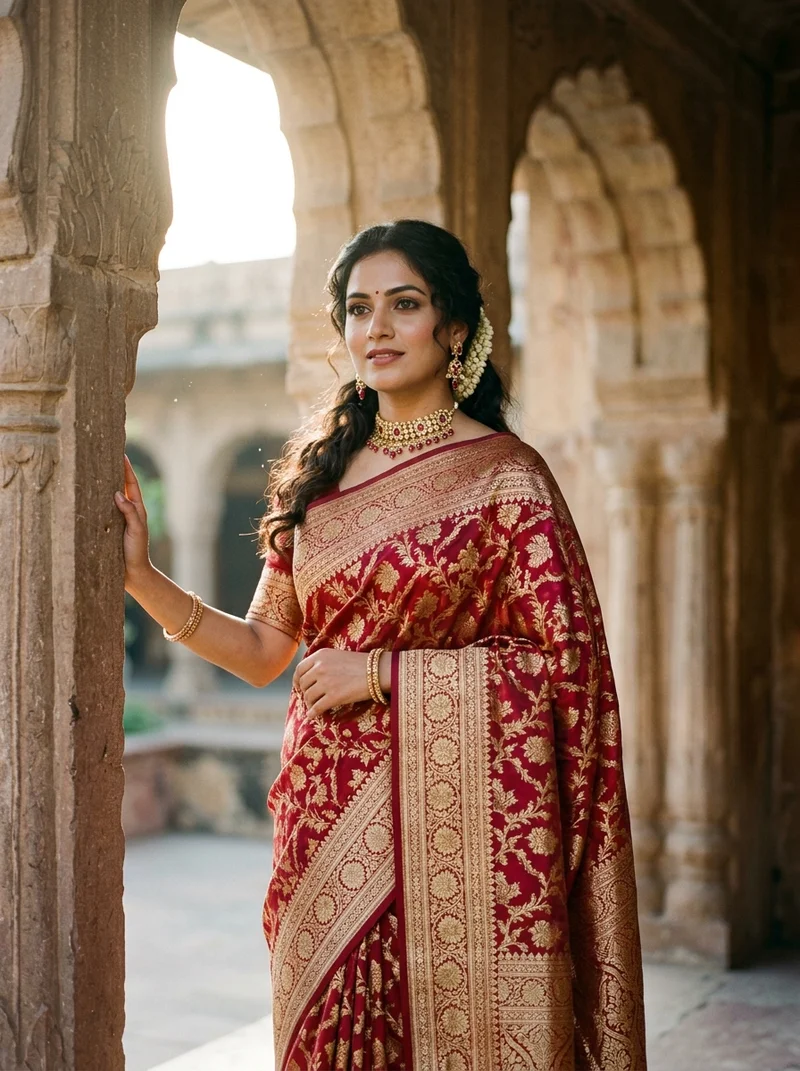
Garment Profile: Kadhwa Weave Pure Mulberry Silk Banarasi Saree.
Jewelry & Styling: Temple Gold Choker with Uncut Rubies and Filigree Jhumkas.
Architectural Setting: Historic Sandstone Heritage Haveli Archway with Morning Light.
Camera Calibration: Hasselblad 500C, 80mm f/2.8 on Kodak Portra 400.
Banarasi silk requires exact weaving terminology to avoid looking like flat printed polyester. By specifying kadhwa borders and floral jaal motifs, Midjourney renders the authentic tactile relief of real handwoven gold metallic threads catching directional side light.
2. Rajasthani Regal Heritage Bridal Lehenga with Intricate Gota Patti & Mirror Work
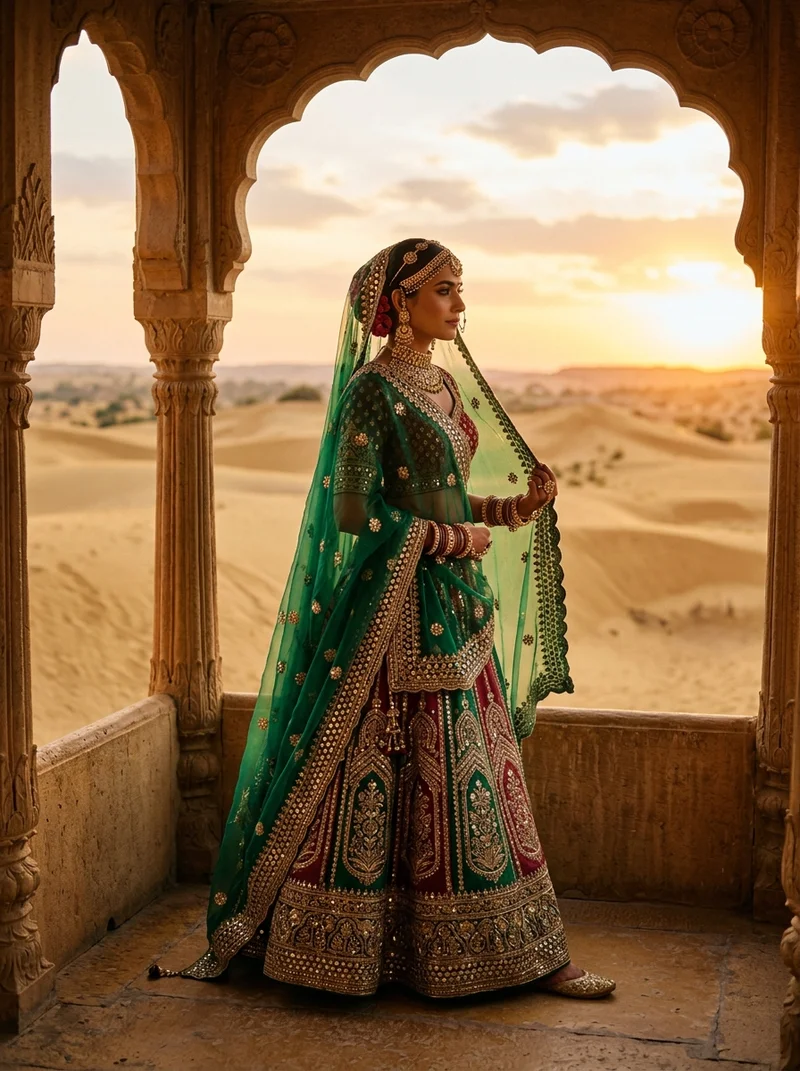
Garment Profile: Raw Silk Bridal Kalidar Lehenga with Gota Patti and Real Mirror Inlays.
Jewelry & Styling: Rajputi Borla Headpiece, Kundan Matha Patti, and Carved Bangles.
Architectural Setting: Sandstone Jharokha Balcony Overlooking Jaisalmer Thar Desert at Golden Hour.
Camera Calibration: 85mm f/1.4 Lens, Shallow Depth of Field, Warm Rim Lighting.
The key to rendering opulent bridal Indian couture is separating the heavy flared lehenga skirt from the delicate translucent dupatta. Organza combined with scalloped gota patti allows the setting desert sun to glow through the sheer head veil while keeping the skirt embroidery crisp and three-dimensional.
3. Imperial Midnight Blue Velvet Sherwani with Handcrafted Zardozi Embroidery
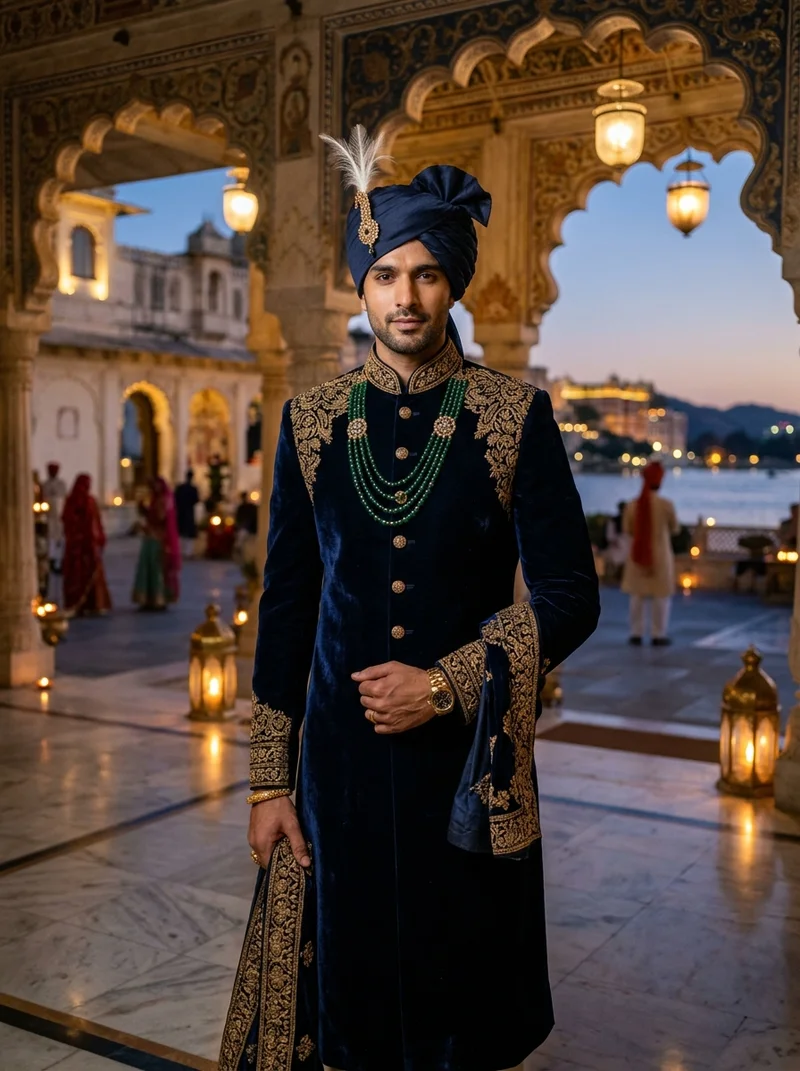
Garment Profile: Structured Heavy Velvet Sherwani with Antique Gold Zardozi Craftsmanship.
Jewelry & Styling: Five-Strand Zambian Emerald Bead Mala and Pearl Kalgi.
Architectural Setting: Grand Marble Courtyard of Udaipur Lake Palace at Twilight.
Camera Calibration: Sony A7R V, 85mm f/1.4, Directional Warm Lantern Ambient Illumination.
Velvet absorbs and reflects light in complex micro-gradients that AI generators often misread as plastic sheen. Prompting structured heavy velvet with antique matte gold zardozi forces the optical engine to render realistic pile texture and tactile embroidery elevation.
4. Ethereal Ivory Lucknowi Chikankari Anarkali Gown with Delicate Pearl Embellishment
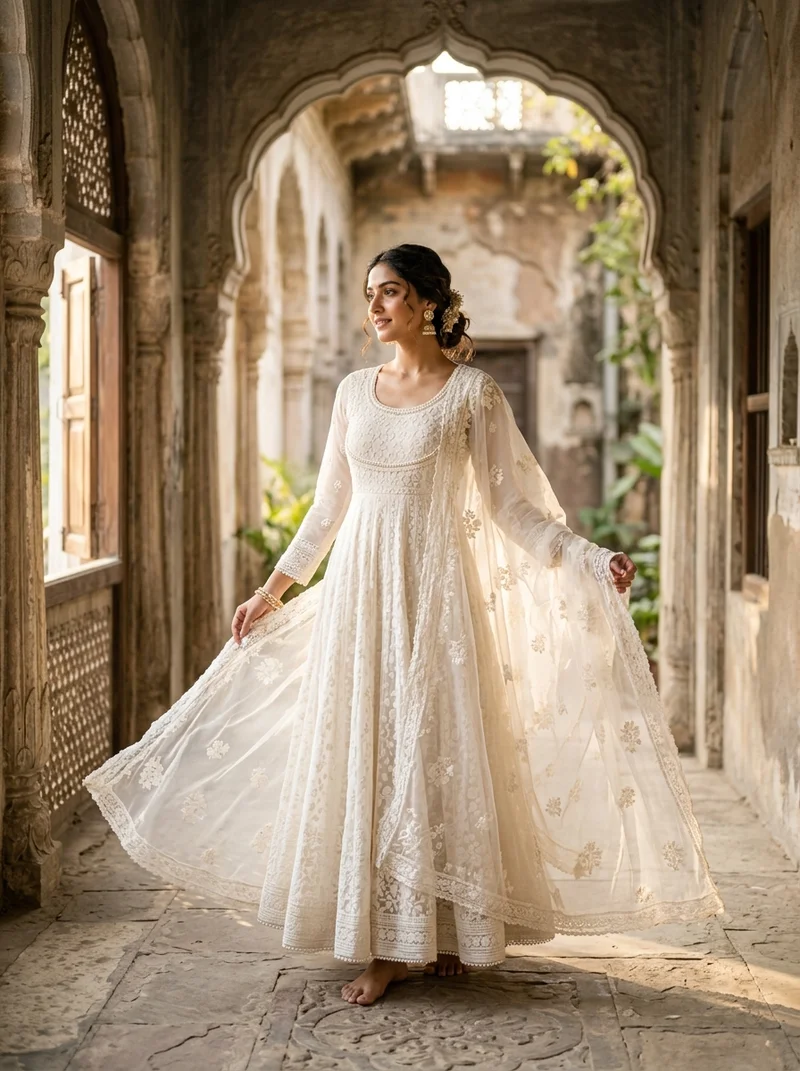
Garment Profile: Floor-Length Pure Georgette Lucknowi Chikankari Anarkali with Shadow Work.
Jewelry & Styling: Delicate Basra Seed Pearl Drops and Polki Ring.
Architectural Setting: Sun-Drenched Arched Corridor of an Awadh Heritage Haveli.
Camera Calibration: Canon EOS R5, 50mm f/1.2, Soft Window Light Diffusion.
Chikankari is famous for subtle tone-on-tone artistry. By prompting white thread shadow work on ivory georgette, the model produces pure haute couture sophistication without excessive garish saturation, highlighting airy garment movement.
5. Temple Heritage Kanjeevaram Silk Saree in Mustard Gold and Peacock Violet
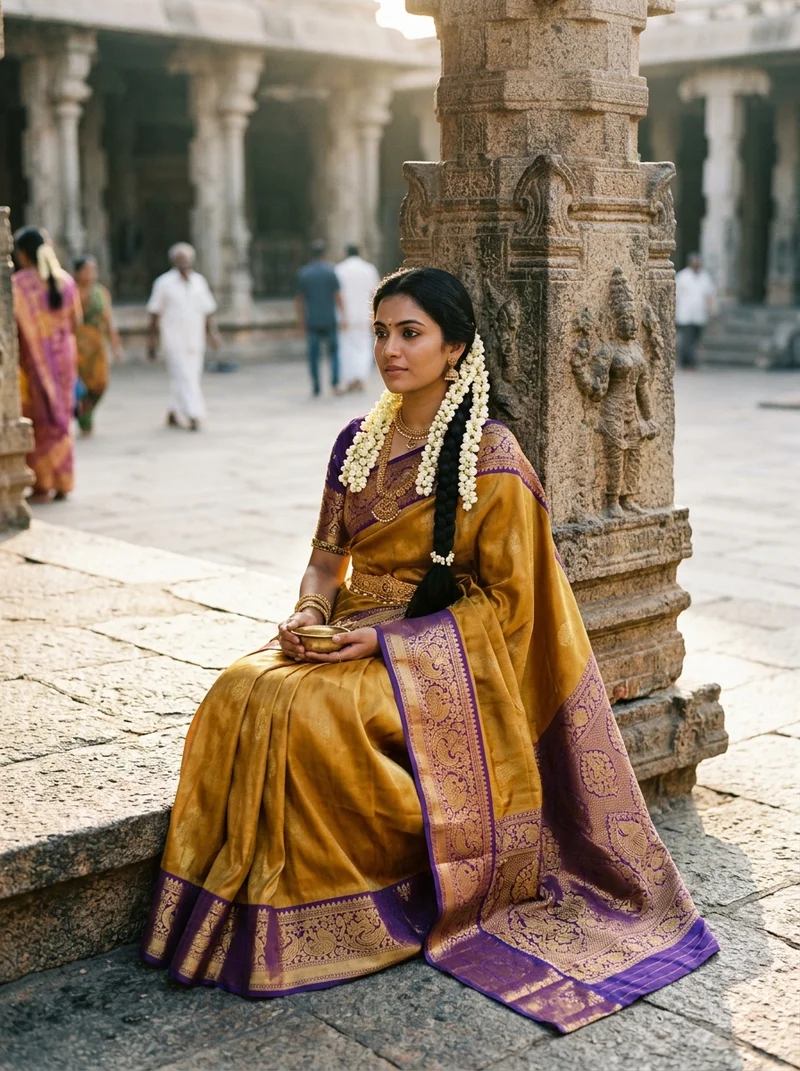
Garment Profile: Pure Mulberry Kanjeevaram Silk with Korvai Contrast Borders and Temple Zari.
Jewelry & Styling: Antique 22k Temple Gold Vaddanam (Waistbelt) and Mango Mala.
Architectural Setting: Carved Granite Pillars of a Madurai Heritage Temple at Sunrise.
Camera Calibration: Hasselblad Medium Format 80mm, High Dynamic Range, Golden Hour Sunlight.
South Indian Kanjeevaram silks are renowned for their substantial weight and rich two-tone korvai weaves. Naming the peacock violet contrast border alongside architectural temple motifs anchors the generation in authentic cultural heritage.
6. Modern Indo-Western Asymmetric Bandhgala in Textured Charcoal Raw Silk
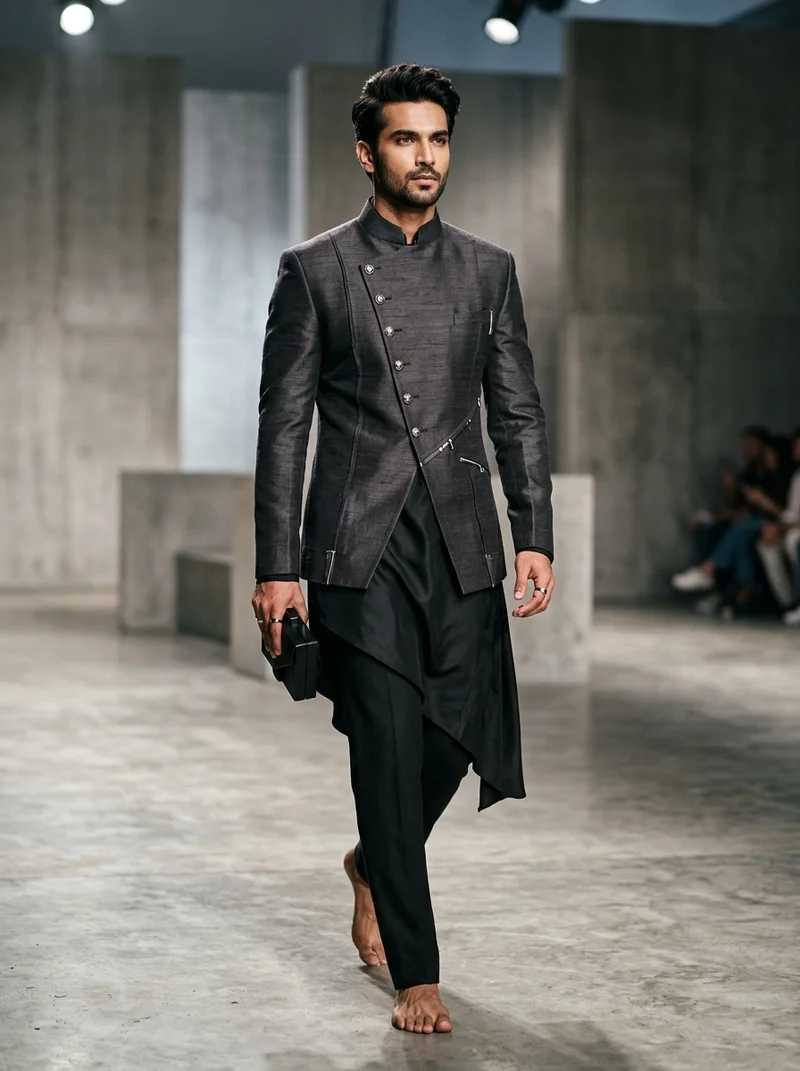
Garment Profile: Asymmetric Cut Charcoal Raw Silk Bandhgala Jacket with Draped Kurta.
Jewelry & Styling: Brushed Gunmetal Cufflinks and Minimalist Platinum Signet Ring.
Architectural Setting: Architectural Concrete Minimalist Runway Stage with Directional Spotlights.
Camera Calibration: Hasselblad H6D-100c, 100mm Prime, Clean Editorial Edge Sharpness.
Indo-Western fusion requires razor-sharp tailoring cues to avoid awkward fabric folds. The asymmetric diagonal placket and charcoal slub raw silk give this look a modern high-fashion runway edge suitable for luxury men's fashion lookbooks.
7. Royal Kashmiri Ruby-Wine Pashmina Pheran with Hand-Embroidered Silver Tilla Work
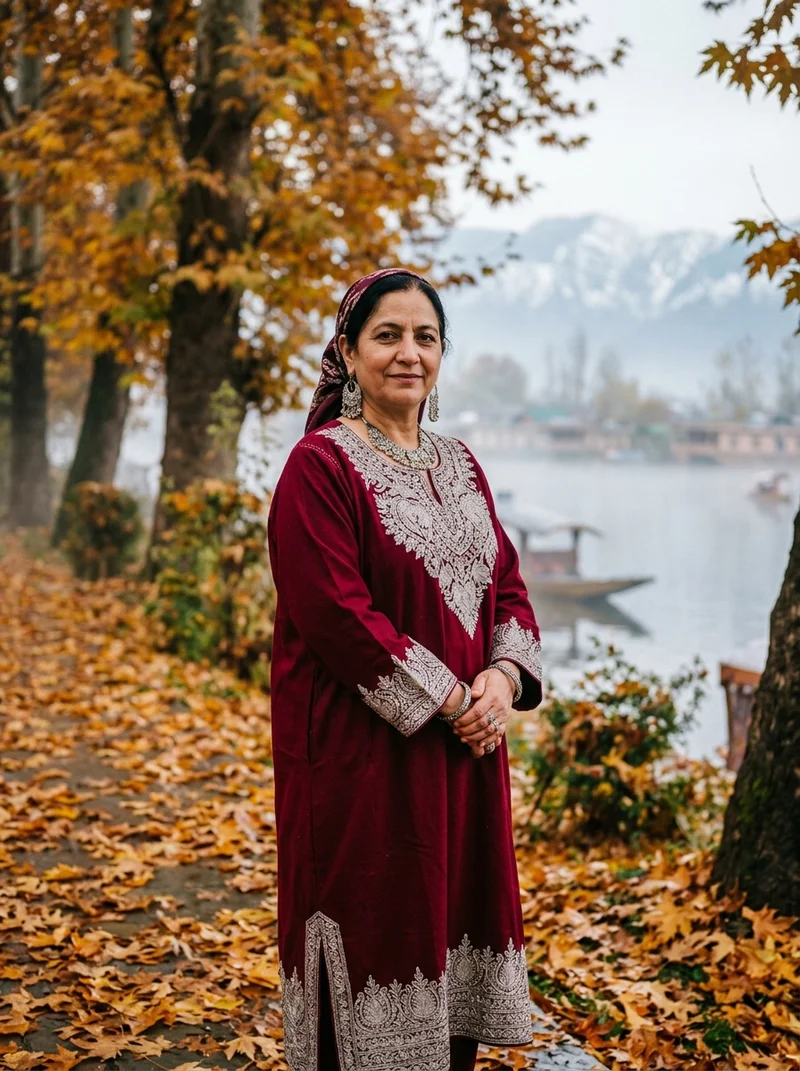
Garment Profile: Pure Handwoven Kashmiri Pashmina Pheran with Silver Tilla Needlecraft.
Jewelry & Styling: Traditional Kashmiri Silver Dejhoor Ear Ornaments and Enamel Rings.
Architectural Setting: Autumn Chinar Tree Garden beside Misty Dal Lake in Srinagar.
Camera Calibration: Fujifilm GFX 100S, 110mm f/2, Soft Overcast Autumn Daylight.
Pashmina wool exhibits a soft, cloud-like texture distinct from standard sheep wool. Pairing ruby-wine cashmere with delicate silver tilla metal thread embroidery creates a mesmerizing visual contrast framed against misty Himalayan chinar foliage.
8. Vibrant Double Ikat Patan Patola Silk Saree with Bandhani Accents
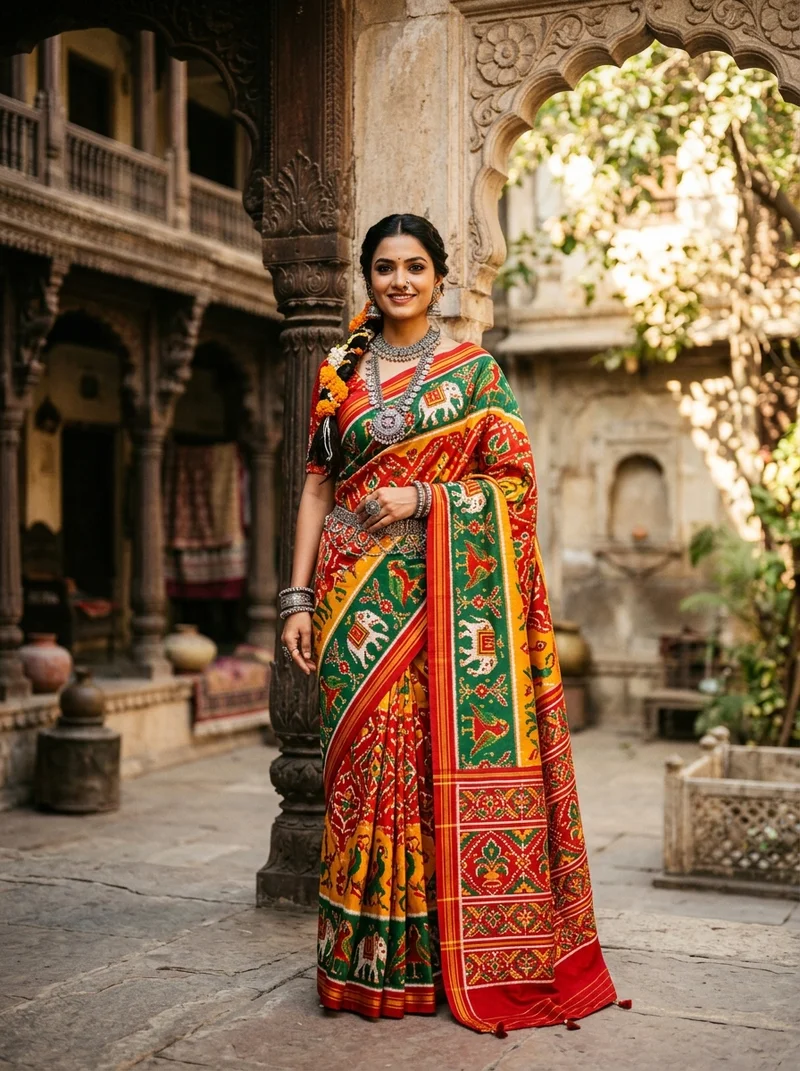
Garment Profile: Double Ikat Patan Patola Pure Silk Saree with Geometric Weaves.
Jewelry & Styling: Heavy Oxidised Silver Tribal Hasli Choker and Elaborate Kangan Cuffs.
Architectural Setting: Sun-Dappled Heritage Pol Courtyard in Old Ahmedabad with Wood Carvings.
Camera Calibration: Hasselblad X2D 100C, 90mm f/2.5, Crisp Geometric Texture Rendering.
Patola is one of the most mathematically intricate weaving crafts in the world. Double-ikat prompt cues guarantee that both warp and weft dyed threads retain sharp geometric precision, preventing fuzzy borders often seen in untrained AI outputs.
9. Modern Ethereal Pastel Rose Organza Saree with Hand-Painted 3D Floral Applique
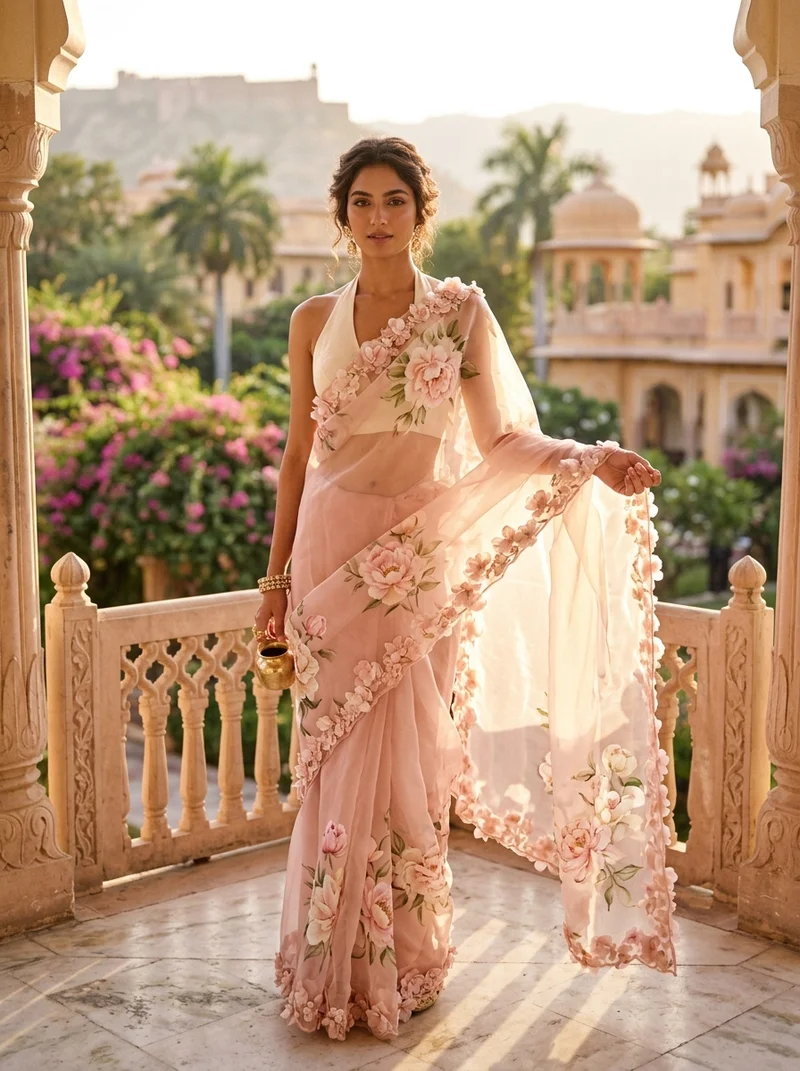
Garment Profile: Translucent Blush Organza Saree with 3D Organza Petals and Watercolor Florals.
Jewelry & Styling: Minimalist Champagne Diamond Studs and Solitaire Ring.
Architectural Setting: Sunlit White Marble Balcony Overlooking Blooming Royal Garden in Jaipur.
Camera Calibration: Canon 85mm f/1.4L, Golden Backlighting, Sheer Translucent Luminosity.
For spring and summer destination weddings, pastel organza represents the cutting edge of contemporary Indian ethnic couture. The backlight prompt instructions capture the delicate halo effect through translucent silk petals.
10. Traditional Rajputana Royal Poshak with Heavy Kundan Jadau Choker
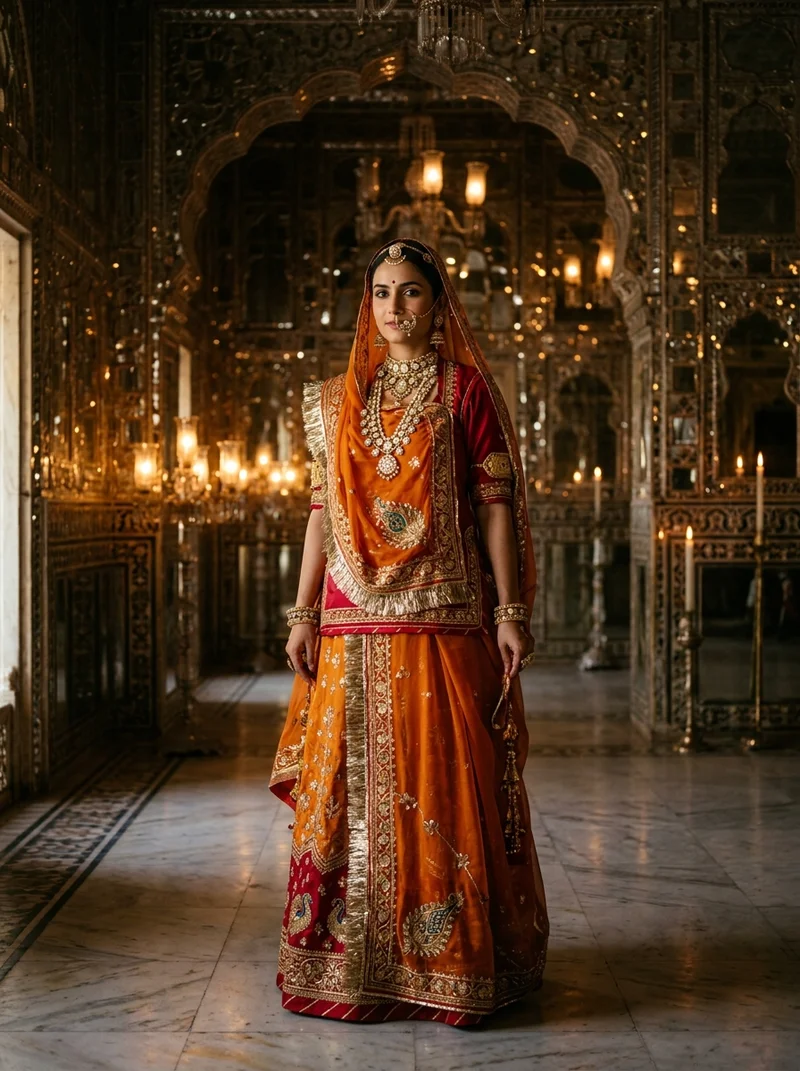
Garment Profile: Multi-Layered Rajputana Poshak (Kanchali, Kurti, Ghagra, Odhani) in Saffron and Red.
Jewelry & Styling: Uncut Polki Kundan Jadau Choker, Traditional Nath Ring, and Rajputi Borla.
Architectural Setting: Mirror-Mosaic Sheesh Mahal Palace Chamber with Warm Candlelight Reflections.
Camera Calibration: Hasselblad Medium Format, 80mm, High-Contrast Chiaroscuro Palace Glow.
The royal Rajput poshak consists of four distinct garment layers requiring meticulous fabric distinction. Placing the subject within a Sheesh Mahal palace chamber generates thousands of authentic micro-reflections across the convex mirror inlays and gold dabka embroidery.
The Four Pillars of Royal Indian AI Couture
Translating traditional Indian garments into photorealistic AI imagery requires understanding the four components that separate generic stock renders from high-fashion editorial campaigns:
1. Textile Weave & Micro-Relief Vocabulary
Generic prompts using words like "shiny dress" or "gold embroidery" trigger blurry yellow brushstrokes. To instruct the AI diffusion model accurately, specify the historic weave mechanism:
- Kadhwa Weave: Real hand-loomed Banarasi brocade where every gold or silver floral jaal motif is woven individually without loose threads on the back.
- Gota Patti: Traditional ribbon-work embroidery from Rajasthan made by pressing small pieces of zari ribbon into petal shapes, catching directional light with distinct angular facets.
- Zardozi: Heavy metallic bullion wire embroidery used on velvet or silk, which provides raised three-dimensional texture and matte antique luster.
- Double Ikat: Patola weaving where warp and weft threads are individually resist-dyed before weaving, creating razor-sharp geometric alignment.
2. Architectural Heritage Backdrops
Indian couture looks best when grounded in authentic heritage architecture. Avoid generic modern studio walls. Instead, contextualize your subjects within:
- Carved Sandstone Jharokhas: Honey-colored lattice windows found in Jaisalmer and Jaipur fortresses that cast delicate geometric shadow patterns across silk fabrics.
- Sheesh Mahal Mirror Halls: Convex mirror mosaic chambers in Amer Fort that bounce hundreds of warm candlelight glints across jewelry and metallic threads.
- Temple Granite Pillars: Monolithic hand-carved stone halls found in Madurai and Hampi that provide a tactile, muted contrast to vibrant Kanjeevaram silks.
3. Authentic Heritage Jewelry Taxonomy
Distorted or floating jewelry is the most common flaw in AI portraiture. Avoid prompting generic "gold necklace". Name specific regional pieces such as:
- Rajputi Borla: A spherical bell-shaped head ornament worn on the center parting of the forehead.
- Kundan Jadau: Uncut diamonds set into pure 24k gold foil with green meenakari enamel work on the reverse.
- Temple Vaddanam: A rigid 22k gold waist belt featuring embossed motifs of Hindu deities and floral vines.
- Hasli: A rigid, collar-style tribal torque necklace crafted from oxidised silver.
4. Camera Calibration & Skin Tone Authenticity
To prevent the artificial "airbrushed plastic" look, calibrate your prompt with medium format camera tags. Adding Hasselblad 500C, Kodak Portra 400 aesthetic, or Sony A7R V with 85mm f/1.4 forces Midjourney to render authentic micro-pores, natural skin undertones, and shallow organic depth of field. Always append --style raw in Midjourney v6.1 to preserve the natural weight and drape of raw silk, organza, and heavy velvet.
Model Benchmarks: Midjourney vs FLUX vs ChatGPT Image
Expand Your AI Prompt Engineering Toolkit
Explore our other tested guides to master commercial fashion, editorial portraits, and high-impact social media aesthetics:
- Best Midjourney Fashion Prompts: 10 Tested Editorial & Streetwear Styles: Explore runway haute couture, Milan tailoring, and modern streetwear lookbooks.
- Best Midjourney Prompts for Realistic Images: Master focal lengths, lighting setups, and camera bodies for lifelike photography.
- Trending Instagram AI Photo Prompts: Viral lifestyle, golden hour portraits, and aesthetic aesthetic photography formulas.
- AI LinkedIn Headshot Prompts: Clean executive portraits and professional corporate headshots.
Frequently Asked Questions
How do you generate authentic Indian traditional saree weaves in Midjourney?
Rather than generic descriptors like "traditional Indian dress", specify authentic regional weaving styles such as Banarasi kadhwa brocade, Kanjeevaram korvai contrast borders, or Patan double ikat. Specify real textile textures like pure mulberry silk, raw silk slubs, or handloom georgette alongside directional side lighting to render three-dimensional zari thread relief.
What are the best camera and lighting settings for Indian ethnic AI photoshoots?
Use portrait prime focal lengths like 85mm f/1.4 or Hasselblad 80mm medium format. Pair this with golden hour natural lighting, candlelit chiaroscuro in heritage havelis, or soft diffused window illumination. Always include --style raw in Midjourney v6.1 to avoid artificial digital plastic sheen on fabrics and skin.
How do you prevent Indian jewelry like Kundan and Jadau from rendering distorted?
Name specific authentic jewelry pieces such as Rajputi borla, uncut polki choker, temple gold vaddanam, or filigree jhumkas. Keep your prompt focused by specifying one or two primary statement jewelry items rather than overloading the prompt with ten conflicting adornments.
Which AI model is superior for Indian royal bridal couture: Midjourney or FLUX.1 Pro?
Midjourney v6.1 excels at rich color graduation, cinematic atmosphere, and organic textile drapery. FLUX.1 Pro delivers unmatched precision on geometric embroidery patterns, architectural sandstone symmetry, and complex multi-layered garments.
Can boutique owners and fashion designers use these prompts for lookbook concepts?
Yes. Independent designers, bridal studios, and apparel startups routinely use these prompt formulas to visualize festive colorways, embroidery placements, and editorial campaign themes before producing physical sample collections.