
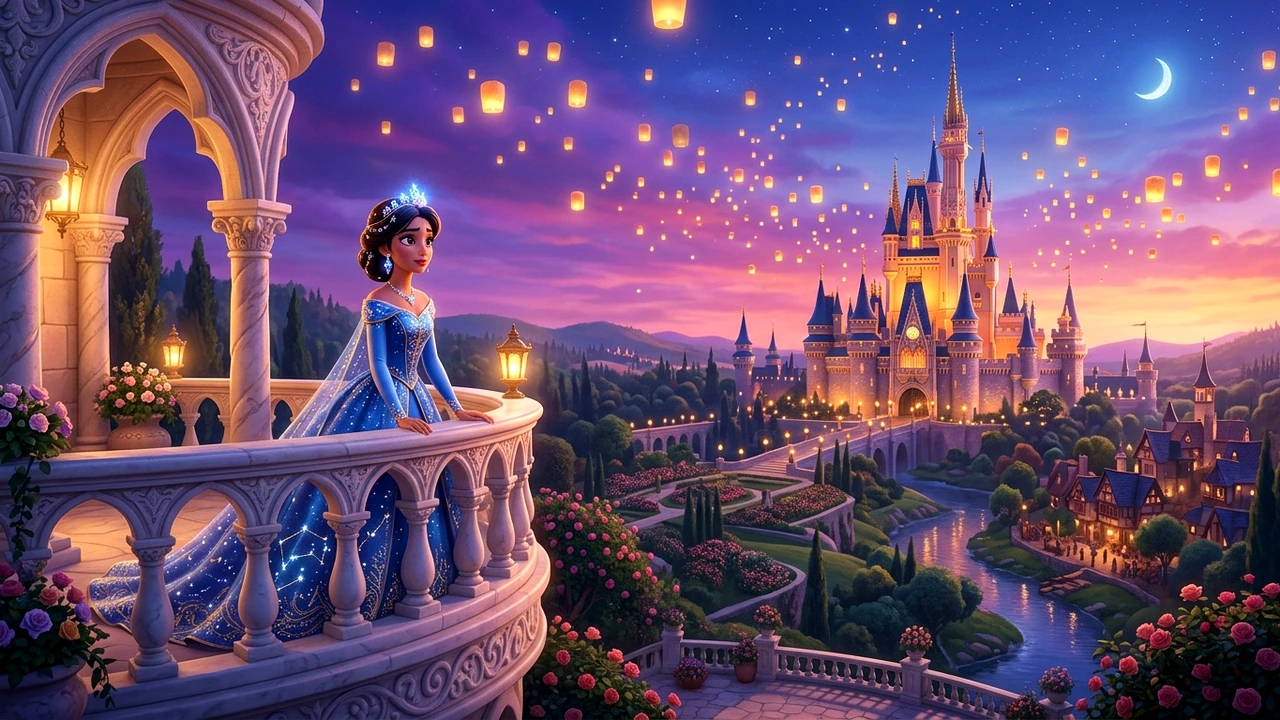
Crafting an authentic gemini prompt for disney character creations requires moving beyond generic keywords like "cute cartoon princess" or "disney style 3D character". With the arrival of Google Gemini's advanced Imagen 3 diffusion architecture, creators can now produce studio-grade 3D Pixar animation visuals and live-action cinematic portraits with unprecedented fidelity. The secret lies in communicating with Gemini using descriptive physical cinematography: specifying multi-layered fabric physics such as iridescent organza and silk brocade, dialling in subsurface scattering (SSS) for translucent epidermal skin and hair fibers, and engineering atmospheric volumetric lighting like floating paper lanterns or bioluminescent coral reefs.
Whether you are searching for an aesthetic disney character gemini prompt to craft viral Instagram profile pictures (DP), engineering a majestic gemini prompt for disney princess collection featuring Rapunzel, Elsa, Cinderella, and Moana, or exploring our tested gemini prompt list for desktop wallpapers and digital art lookbooks, the 12+ prompt formulas below have been calibrated across Google Gemini, Midjourney v6.1, and ChatGPT. Each recipe includes one-click prompt copying, direct engine launch links, and technical explanations of why the prompt syntax excels. You can also analyze your own reference photos using our in-browser AI Image to Prompt Studio.
Editorial Note: All prompt formulas in this guide are independent educational studies in 3D feature animation lighting, subsurface skin shading, and storybook architectural composition for creating original characters and scenes. The Prompt Deck is an independent publication and is not affiliated with or endorsed by The Walt Disney Company or Pixar Animation Studios.
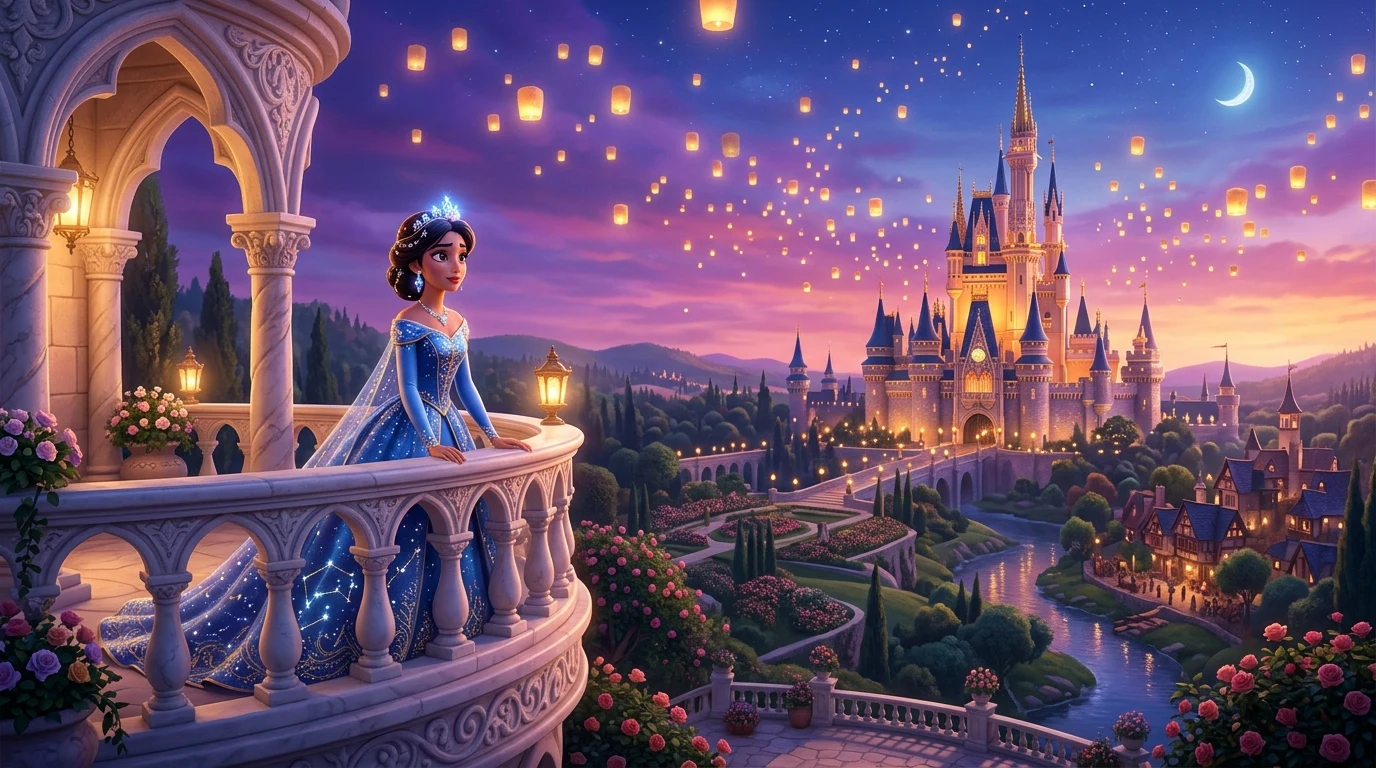
1. Rapunzel in the Corona Lantern Festival with Luminous Golden Hair
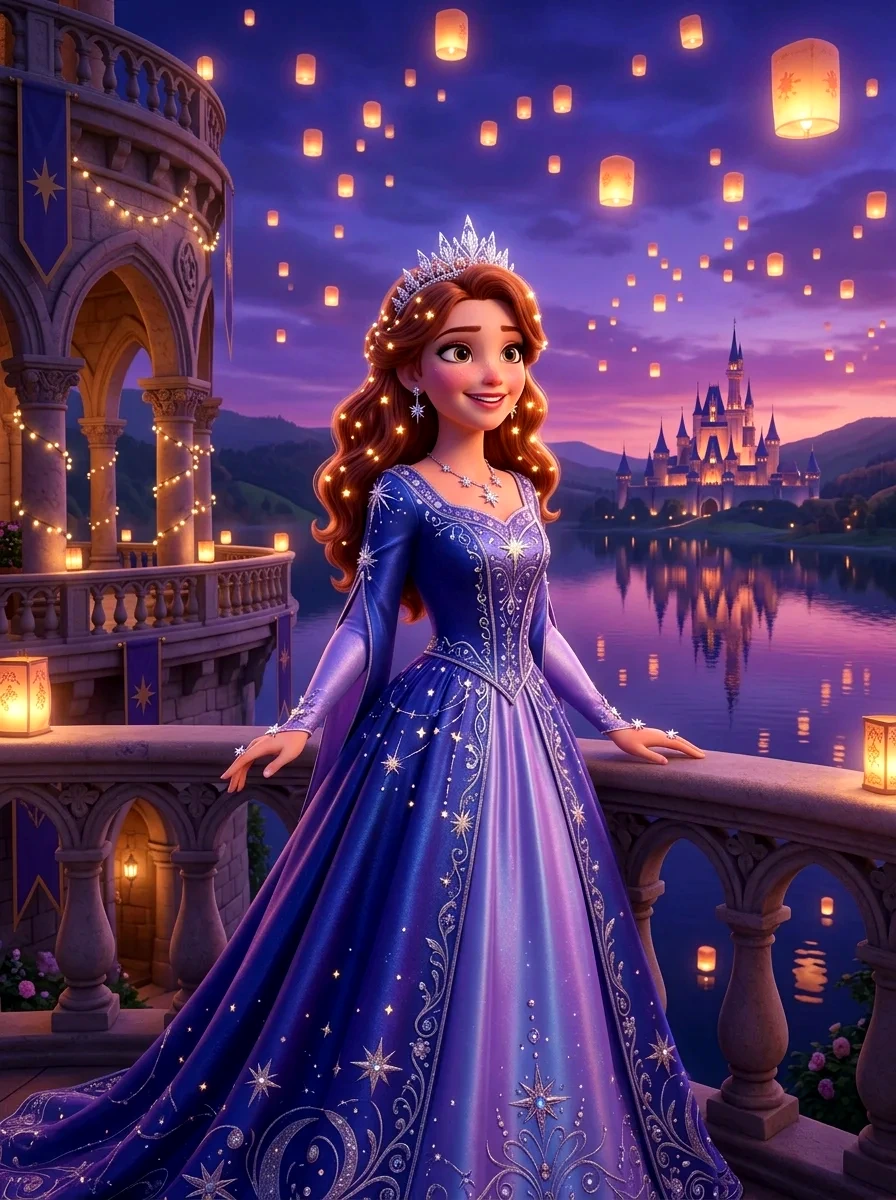
In Google Gemini and Imagen 3, specifying exact floral species (purple pansies, pastel wildflowers) and physical hair transmission (luminous golden braided hair with subsurface scattering) prevents hair from clumping into generic yellow geometry. The floating lanterns create warm point light sources that establish strong atmospheric rim lighting against the violet dusk sky.
2. Cinderella at the Royal Palace Grand Marble Staircase at Midnight
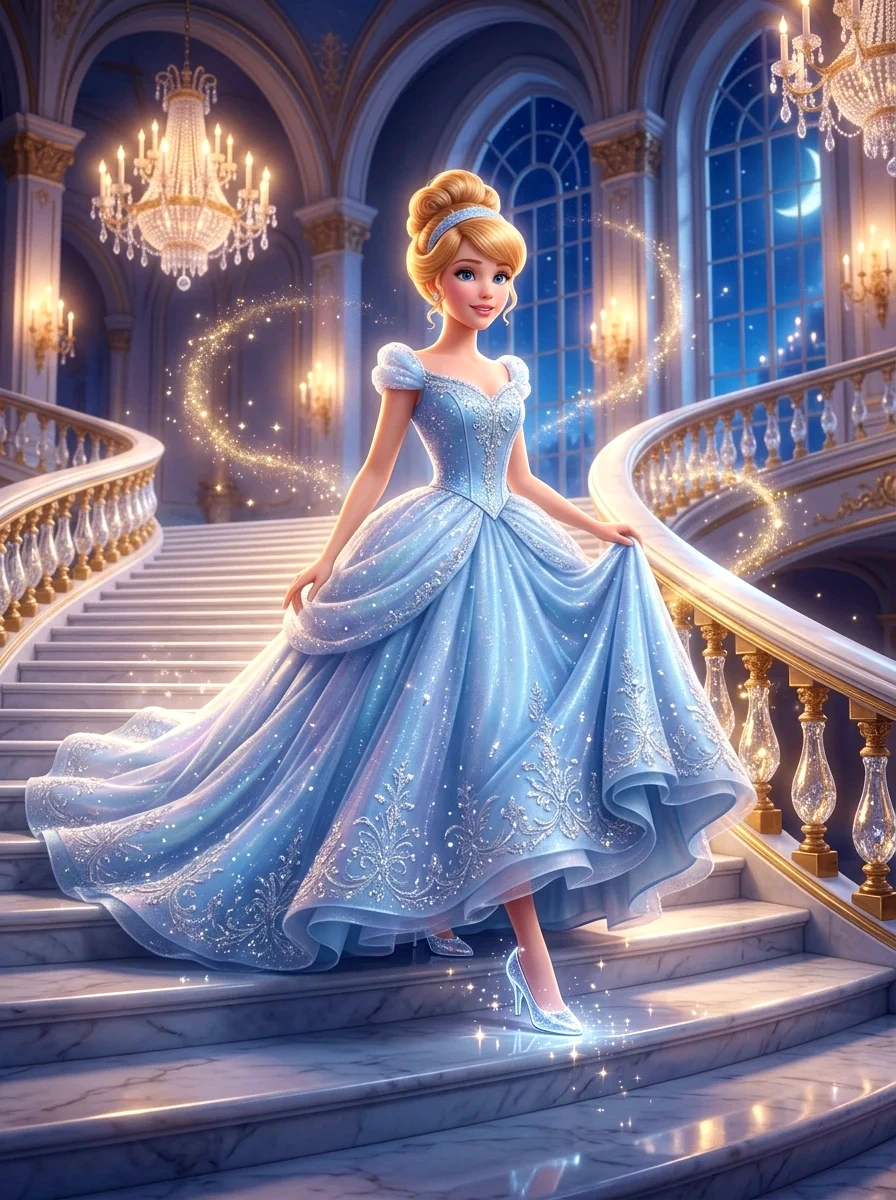
Cinderella's dress demands material specification to avoid flat cyan tones. Prompting crystalline translucent organza with microscopic silver glitter dust triggers Gemini's specular reflection engine, while the grand curved marble staircase provides regal architectural leading lines.
3. Belle in the Beast Enchanted Castle Library with Magic Rose
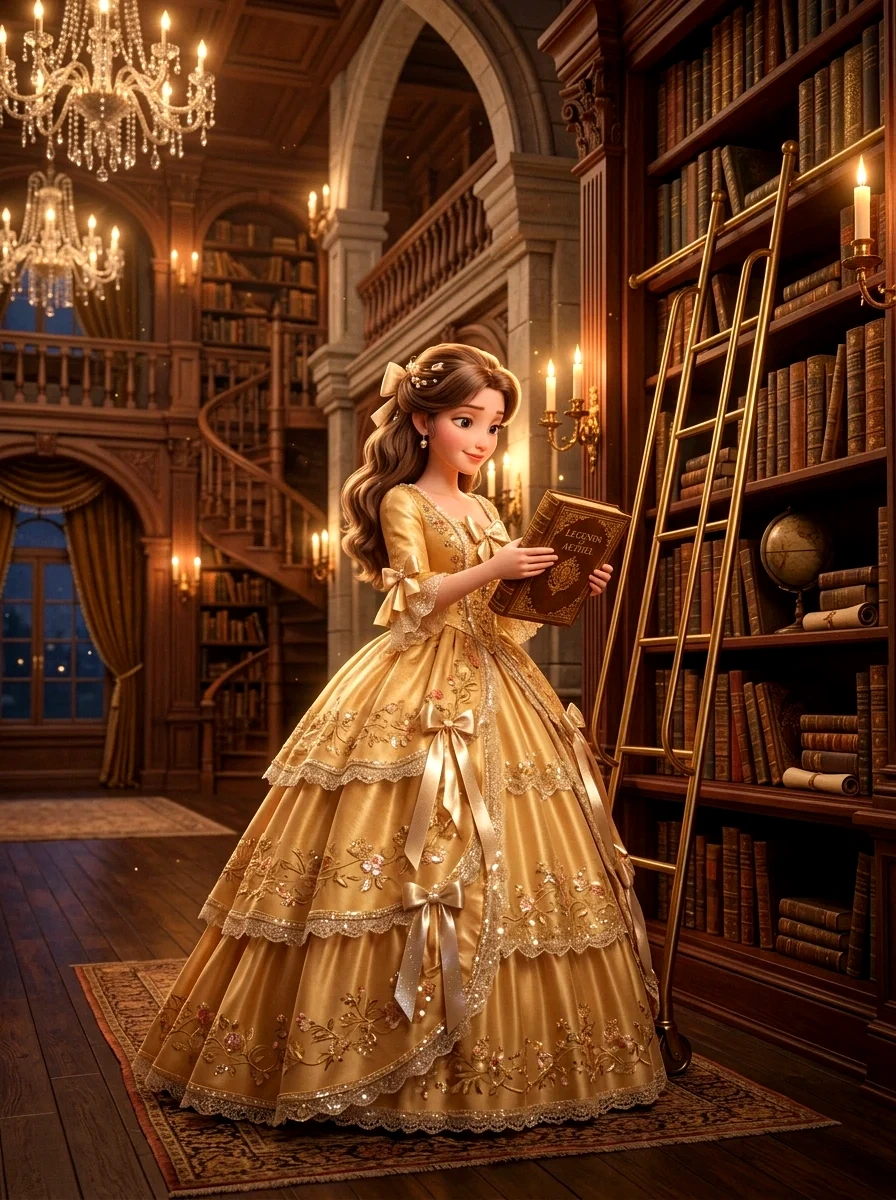
Belle's yellow gown often suffers from oversaturation in AI generators. Adding silk brocade and gold filigree embroidery forces tactile textile detail. The contrast between warm candelabra tungsten light and deep walnut bookshelves delivers authentic Disney storybook warmth.
4. Elsa the Snow Queen in Glacial Fractal Ice Palace with Northern Lights
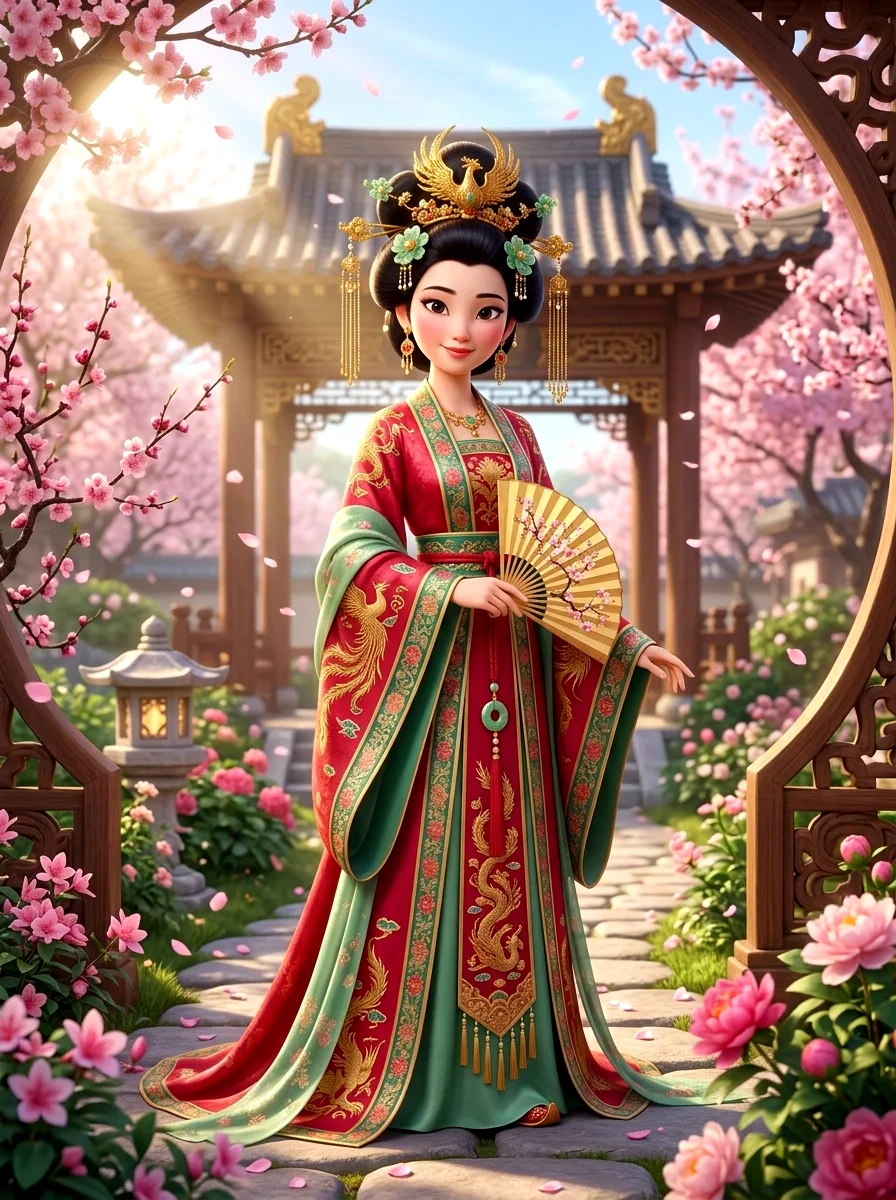
Ice palettes require balanced multi-chromatic lighting. By incorporating the emerald and violet aurora borealis, the crystalline palace reflects complementary tones across Elsa's frosted gown, avoiding sterile monochrome rendering.
5. Princess Jasmine Soaring over Twilight Agrabah on Magic Carpet
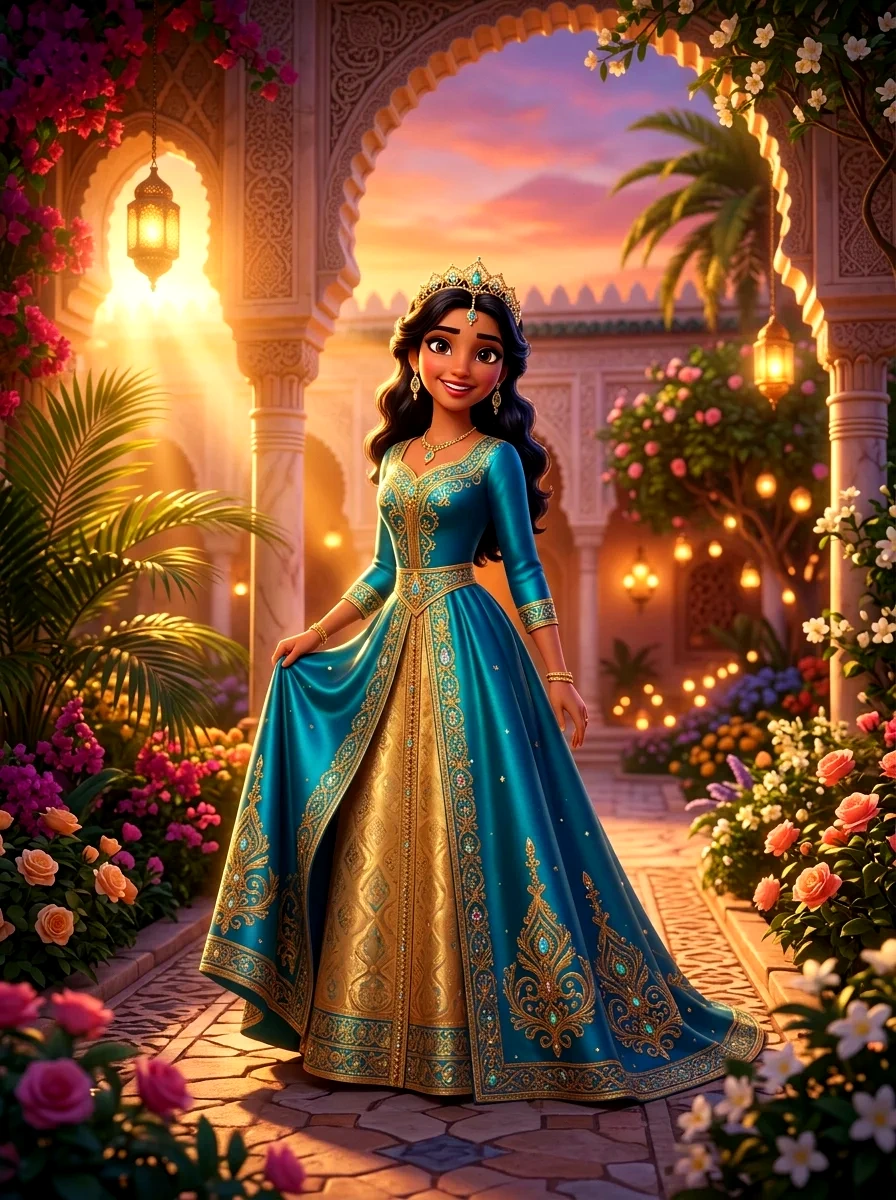
Peacock turquoise silk contrasted against 24k gold filigree is Jasmine's signature color harmony. The elevated flying-carpet perspective provides rich verticality, with glowing desert palace lanterns adding warm floor-level illumination.
6. Ariel the Little Mermaid in Bioluminescent Coral Grotto Ocean Depths
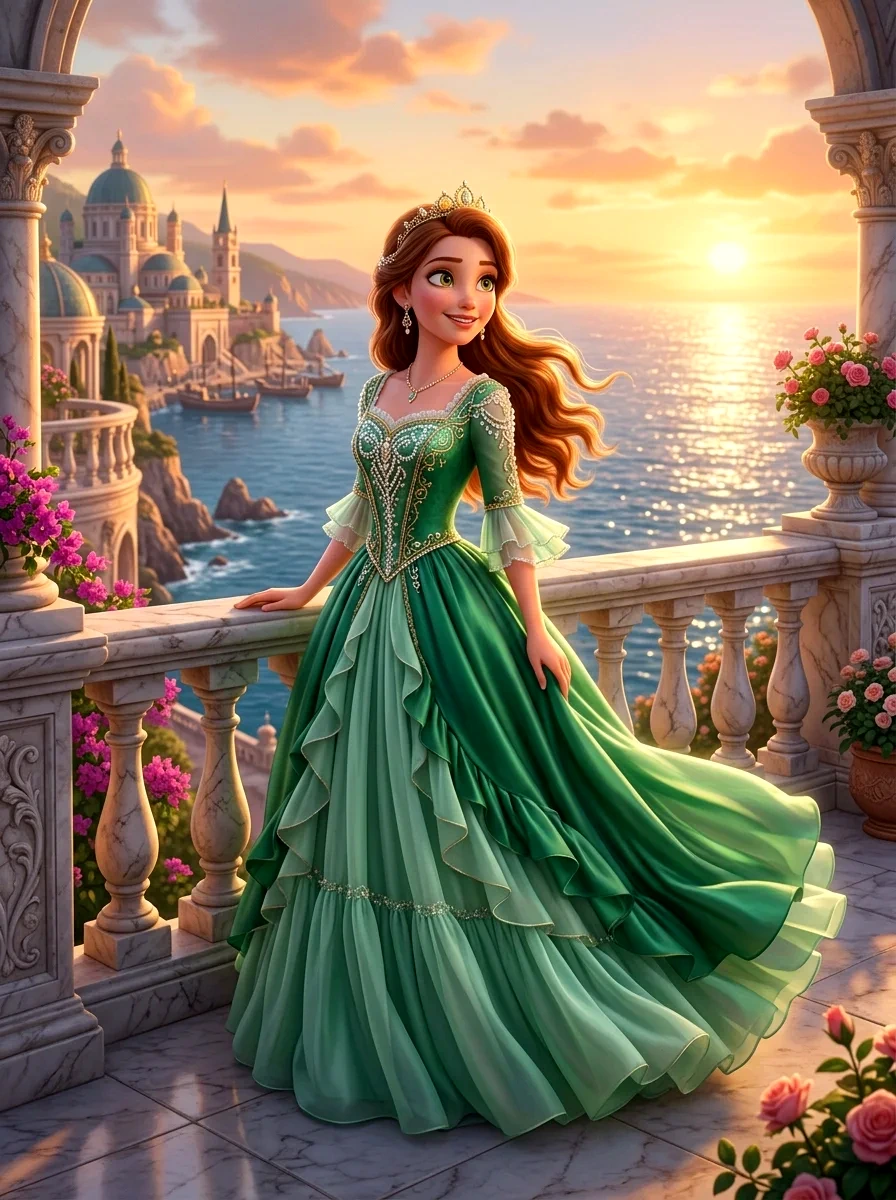
Underwater Disney prompts succeed when hydrodynamic physics are explicitly defined. Prompting weightless hair floatation and dancing caustic sunbeams directs Gemini's lighting engine to create authentic aquatic depth and luminous coral refractions.
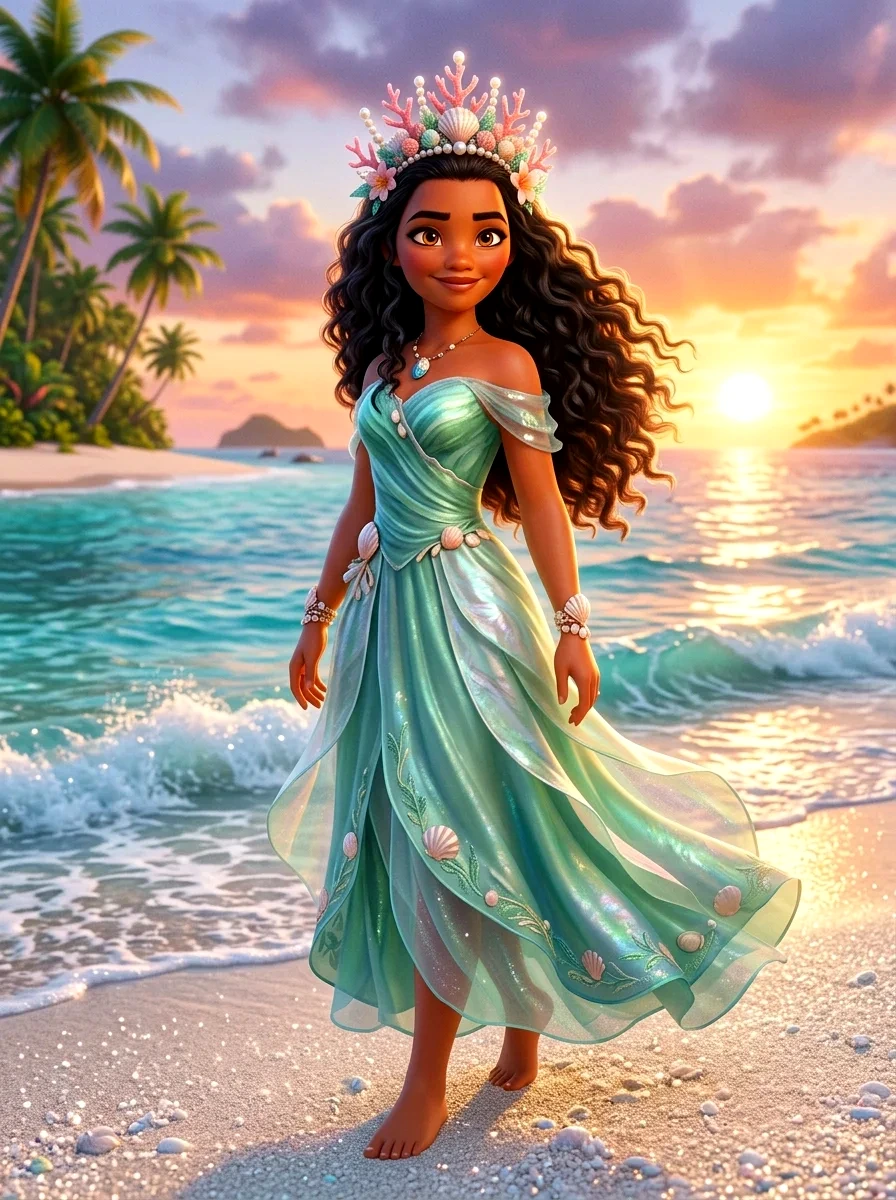
7. Moana of Motunui Holding the Glowing Heart of Te Fiti by Night Ocean
The key to this prompt is the central internal light source: the spiral green jade Heart of Te Fiti. Its emerald luminescence provides high-contrast chiaroscuro key lighting against the cool bioluminescent blue ocean waves, creating dramatic visual storytelling.
8. Fa Mulan in Ceremonial Warrior Armor under Blooming Cherry Blossoms
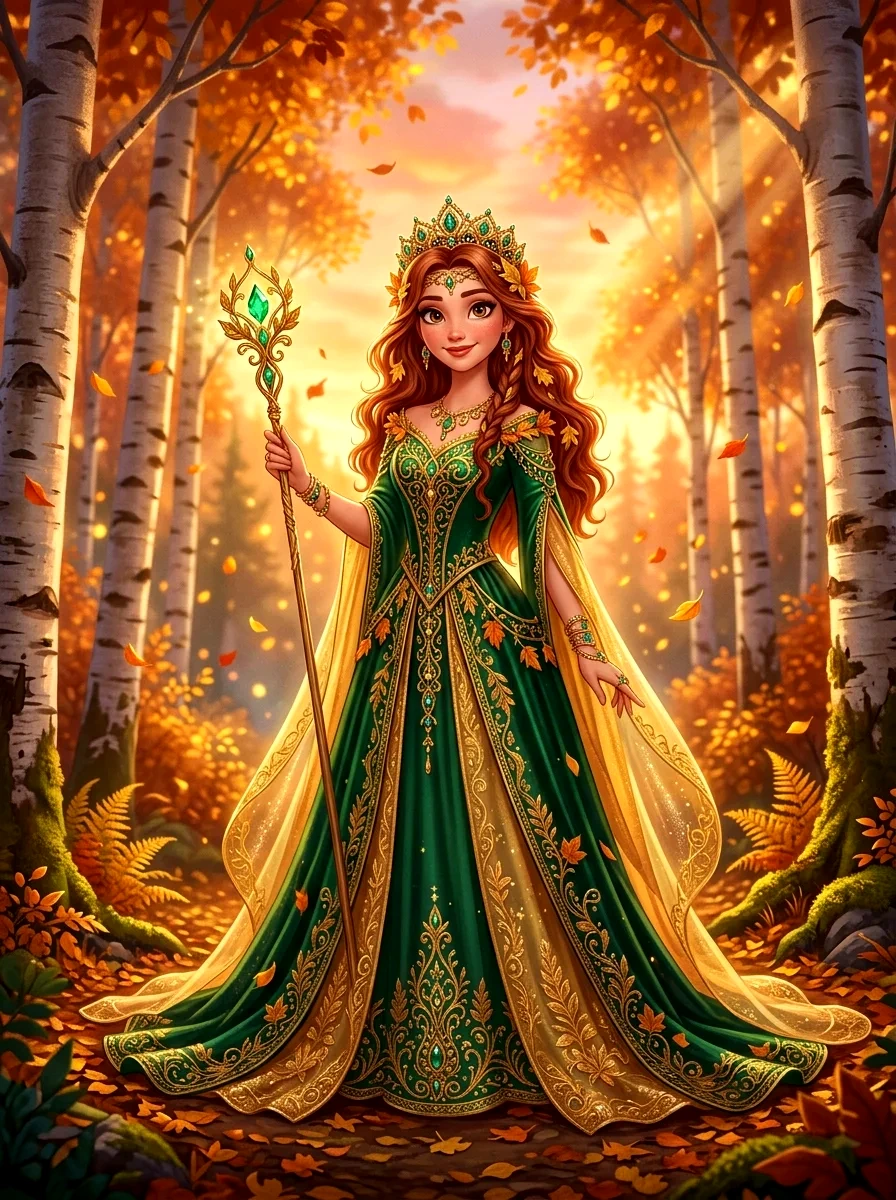
Mulan's warrior look bridges Disney animation with authentic dynastic armor. Lacquered scales and engraved silver dragon emblems give structural weight, while drifting pink cherry blossom petals soften the composition with graceful kinetic depth.
9. Princess Tiana in Water-Lily Emerald Gown on French Quarter Balcony
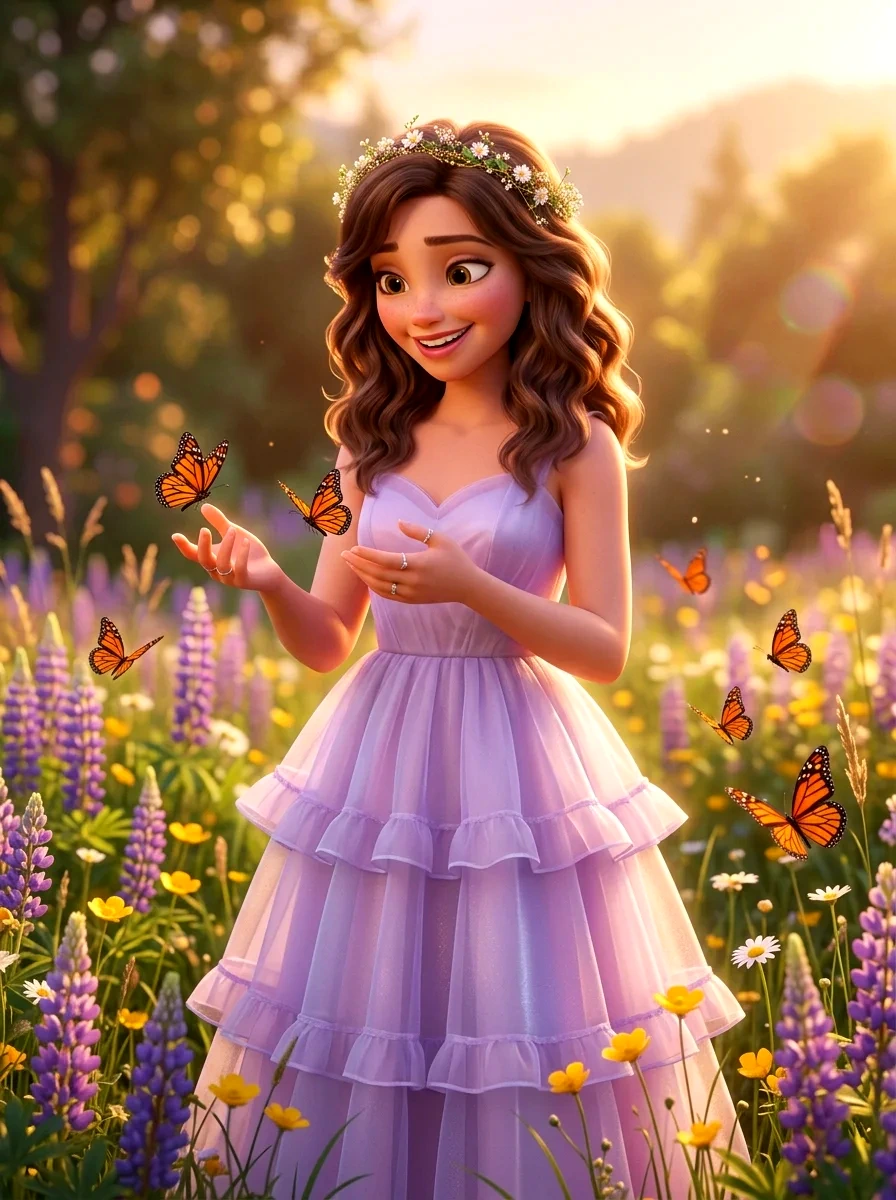
Tiana's water-lily motif comes alive through tiered celadon green and golden-amber satin. The vintage wrought-iron architecture and gas lamp illumination anchor the scene in 1920s New Orleans while delivering classic Disney royalty charm.
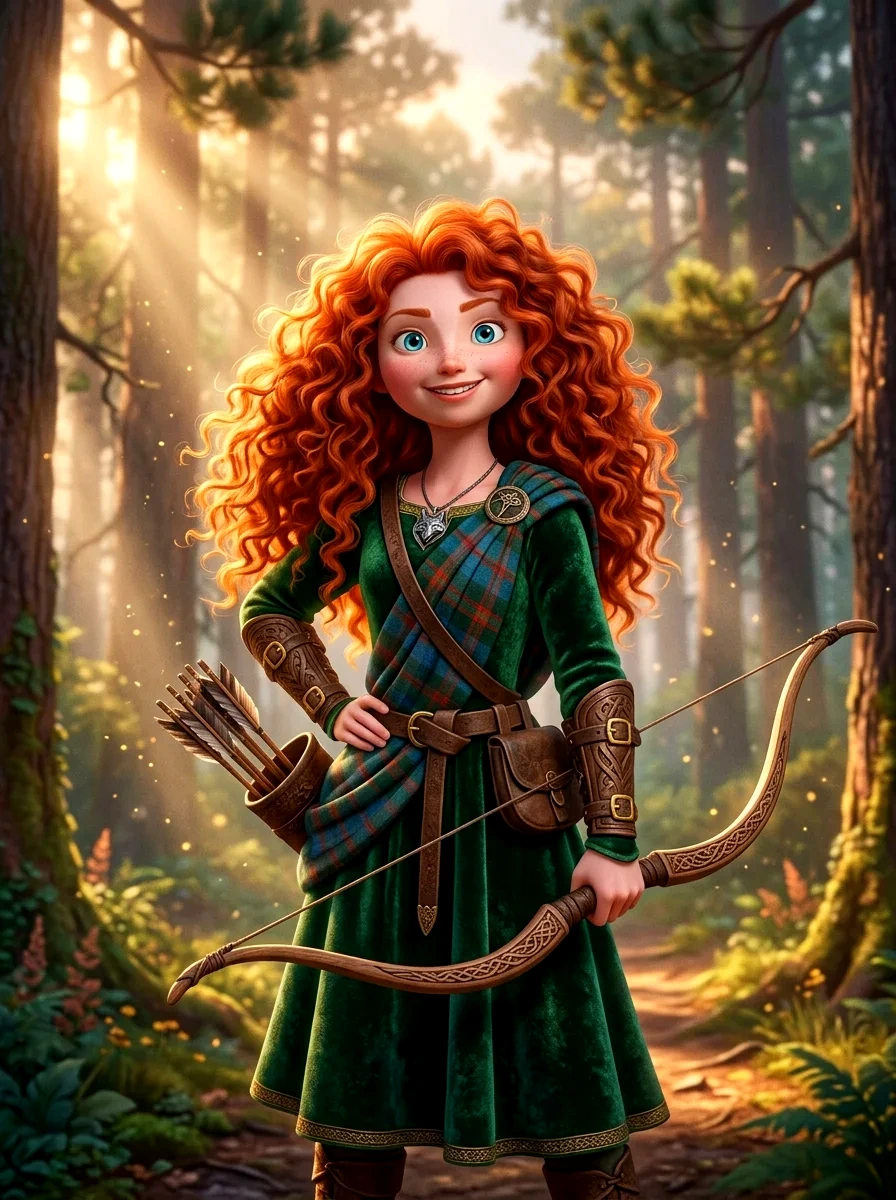
10. Princess Merida with Recurve Bow in Misty Scottish Pine Forest
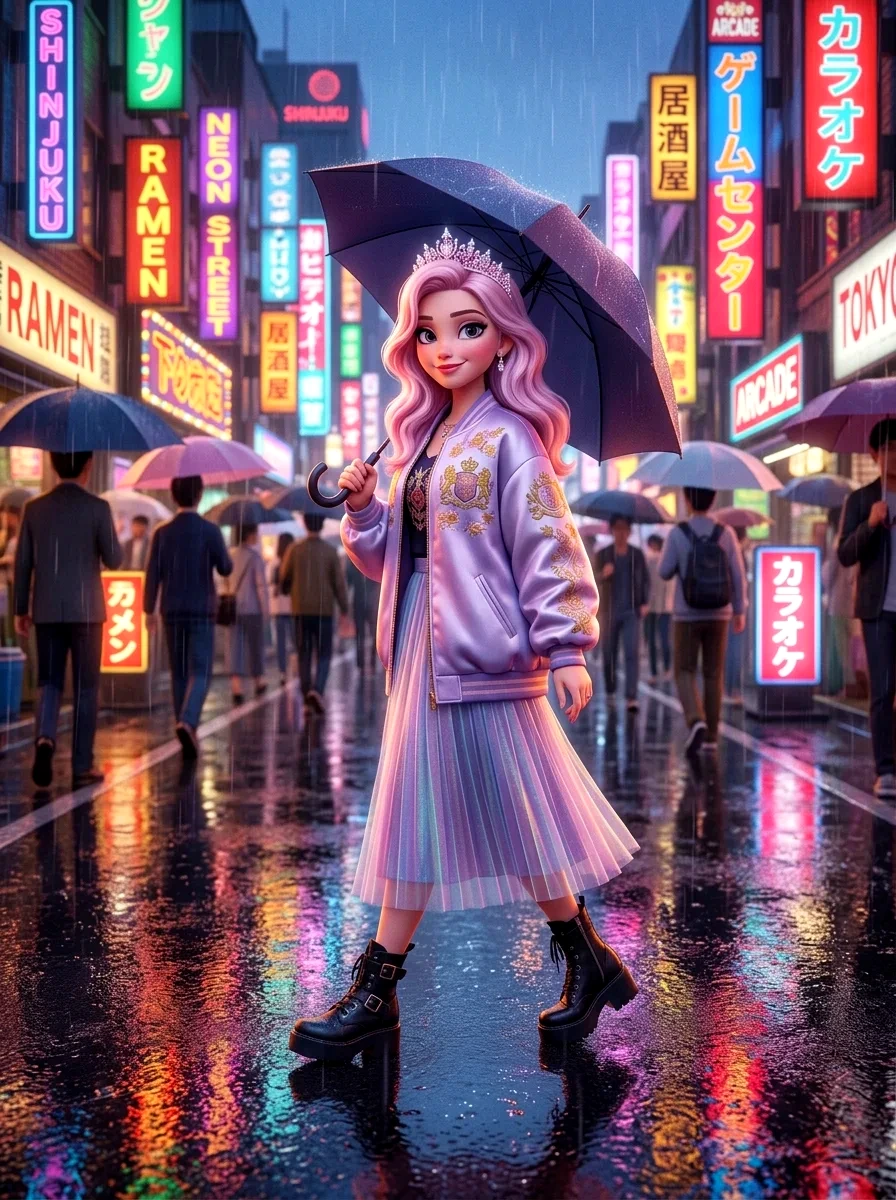
Merida's curly red hair is famous in 3D animation history. Describing untamed volumetric curls with Scottish morning fog and floating will-o'-the-wisps challenges the diffusion model to render realistic hair strands and ethereal point-light reflections.
11. Snow White with Gentle Forest Fawns in Sun-Dappled Ancient Grove
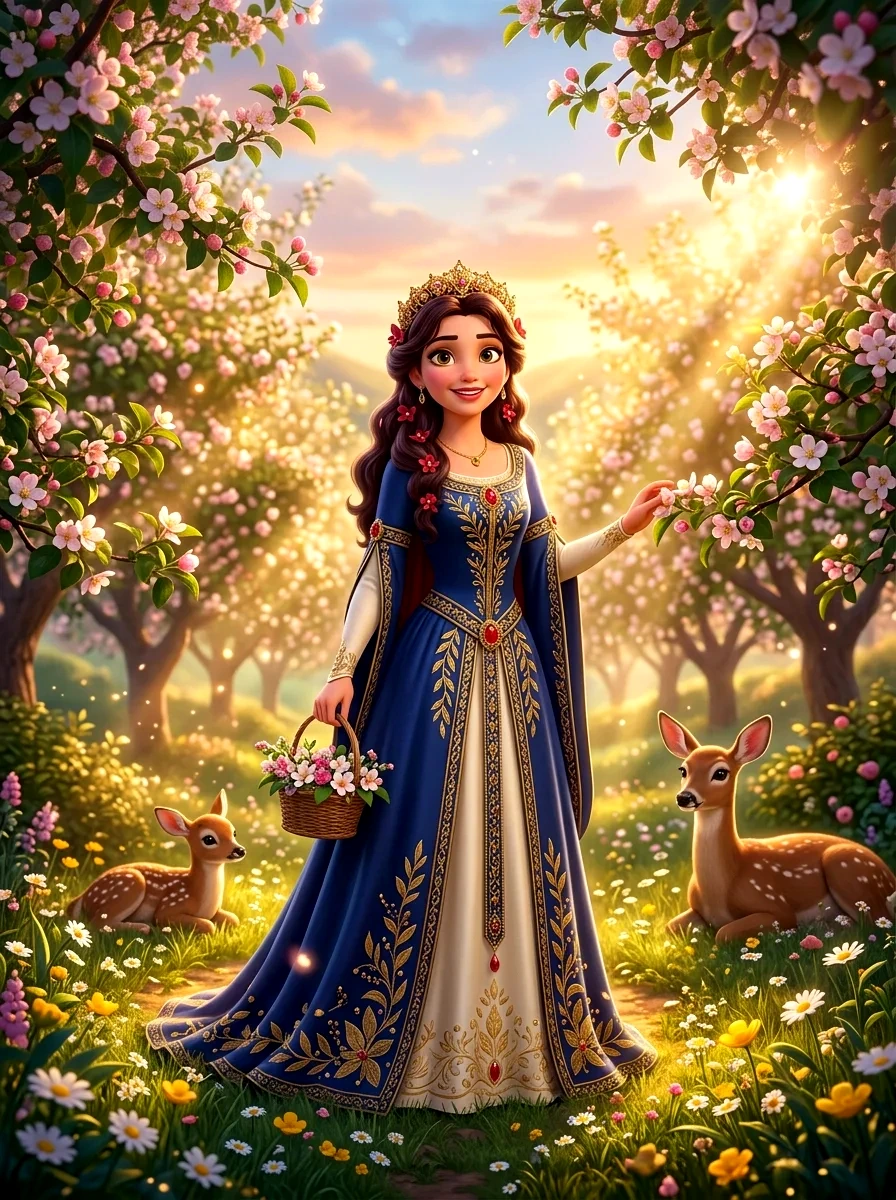
Snow White's tri-color palette (navy blue, buttercup yellow, crimson) needs distinct fabric finishes like velvet and silk. Adding volumetric sunbeams and inquisitive woodland creatures recreates the pastoral tranquility of early Disney animation in modern 3D fidelity.
12. Princess Aurora Sleeping Beauty in Royal Rose Garden at Sunset
Aurora's Eyvind Earle-inspired angular aesthetic benefits from prompting sharp origami geometric collar folds paired with cascading soft golden curls. The climbing rose pergola frames the subject with organic beauty, while distant sunset turrets create iconic fairytale depth.
How Google Gemini (Imagen 3) Deconstructs Disney Character Prompts
Generating iconic Disney characters in Google Gemini requires understanding how Gemini's underlying diffusion engine, Imagen 3, processes natural language compared to Midjourney and ChatGPT:
- Natural Language Paragraphs over Comma Soup: Unlike Midjourney which thrives on dense comma-separated tokens, Gemini behaves like an experienced digital artist reading a cinematic storyboard. Cohesive sentences describing spatial relationships, lighting origins, and character emotional state produce vastly superior anatomy.
- Optical Material Descriptors: Gemini has state-of-the-art understanding of real-world physics. Rather than asking for 'shiny blue dress', prompts that specify 'crystalline translucent organza with microscopic silver glitter dust and prismatic refraction' yield authentic theatrical costuming.
- Subsurface Scattering for Skin & Hair: The hallmark of modern 3D feature animation (such as Tangled, Frozen, and Moana) is light penetration through epidermal layers. Including keywords like 'subsurface scattering on skin and hair' prevents characters from looking like hollow plastic mannequins.
The Optical Anatomy of 3D Pixar Animation: Eliminating Plastic Dolls
The dreaded 'AI plastic doll look' happens when lighting is flat, eye reflections are missing, and hair lacks micro-strand depth. When creating Disney character prompts, integrate these four optical anchors:
Always prompt for 'crisp crystalline catchlights in the pupils'. Without directional eye reflections, 3D animated characters appear lifeless and glassy.
Differentiate garment surfaces by name: duchess satin, velvet corsetry, pleated chiffon, or wool tartan. This instructs the model to calculate accurate light absorption and bounce.
Incorporate a luminous secondary light source behind the character (sunset rim light, floating lanterns, or northern lights) to cleanly separate the silhouette from the background.
Specify 'volumetric hair with delicate individual flyaway strands catching the light' to break up stiff polygon geometry and establish realistic animated softness.
Gemini Negative Prompting: Fixing Extra Limbs & Washed Contrast
When running Disney character generation in Gemini, DALL-E 3, or Midjourney, appending negative guidance ensures high commercial quality. Copy our calibrated negative formula:
Aspect Ratio Blueprints: Wallpapers (16:9), Feed (3:4) & Avatars (1:1)
Selecting the appropriate aspect ratio determines how your Disney character render frames on different devices and social platforms:
- 3:4 Portrait Format (--ar 3:4): Best for Instagram posts, Pinterest pins, and character showcases. Provides generous vertical headroom while capturing intricate dress hem details and footwear without side-cropping.
- 9:16 Vertical Story / Lock Screen (--ar 9:16): Engineered for TikTok, Instagram Reels covers, and smartphone wallpapers. Gives dramatic vertical scale to towering ice spires and floating lantern cascades.
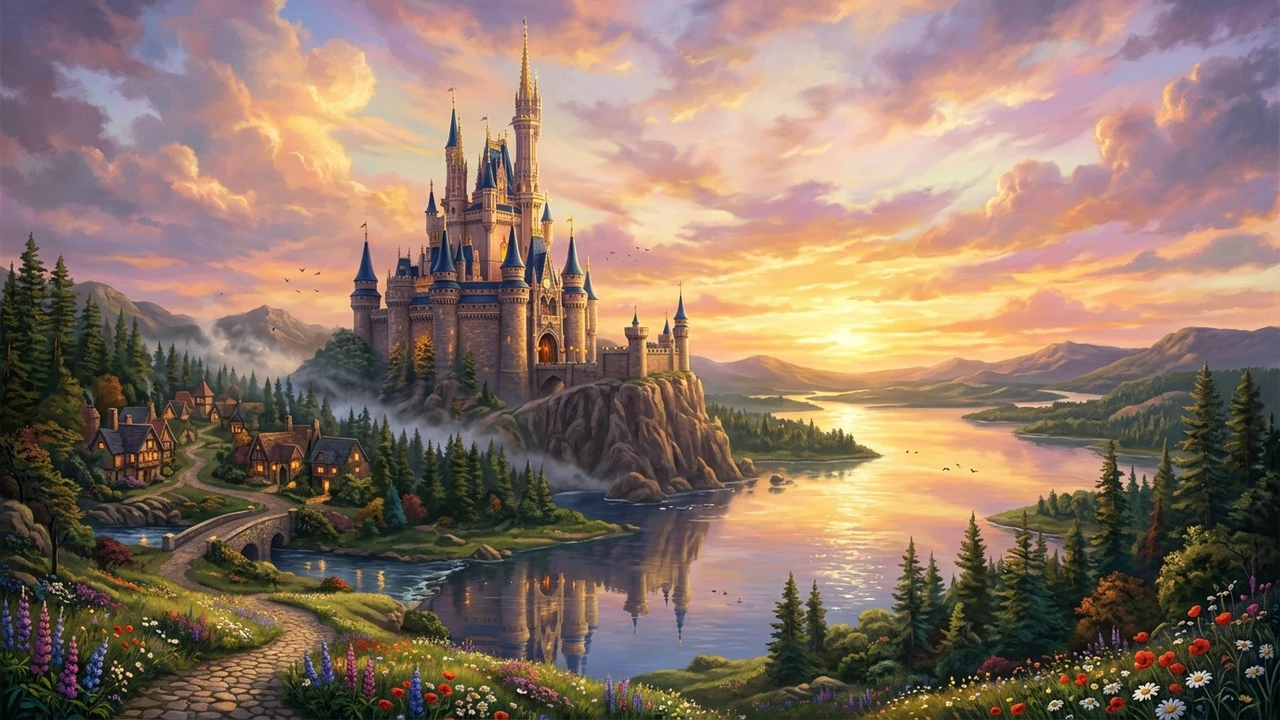
- 16:9 Widescreen Desktop (--ar 16:9): Ideal for 4K desktop wallpapers and YouTube cinematic banners. Allows characters to be framed within expansive environments like our Disney Castle Fairytale Guide.
- 1:1 Square Avatar (--ar 1:1): Perfect for WhatsApp DP, Discord avatars, and profile icons focusing tightly on expressive facial features.
Frequently Asked Questions
How do you prompt Disney characters in Google Gemini?
In Google Gemini (powered by Imagen 3), describe characters through descriptive physical cinematography rather than raw keyword tags. Specify modern 3D Pixar animated feature render, detailed fabric textures like duchess satin or silk brocade, ocular catchlights in expressive eyes, ray-traced subsurface scattering on porcelain skin, and directional environmental lighting.
Why do AI Disney characters look like plastic dolls and how do you fix it?
Plastic skin occurs when prompts omit material lighting physics. To fix this, prompt subsurface scattering (SSS) for skin and hair translucency, natural ocular catchlights in the pupils, textured fabric weaving (tweed, velvet, lace), and warm volumetric bounce lighting from surrounding lanterns or sunsets.
Can these Gemini prompts also be used in Midjourney and ChatGPT DALL-E 3?
Yes. Every prompt in this collection is multi-model compatible. For Midjourney, we append parameter flags like --ar 3:4 --style raw --v 6.1. For ChatGPT and Gemini, the detailed natural language syntax renders directly with zero modifications.
Which aspect ratio is best for Disney character mobile wallpapers and Instagram?
For Instagram portraits, Pinterest pins, and feed cards, use 3:4 portrait (896x1200 or 1080x1350). For smartphone lock-screen wallpapers, use 9:16 vertical. For desktop 4K wallpapers, select 16:9 widescreen landscape.
What negative prompts should I use in Gemini to prevent anatomical glitches?
When prompting in Gemini or Midjourney, avoid plastic skin, over-smoothed digital look, deformed fingers, extra limbs, cartoon flat colors, blurry background, watermark, low resolution artifacts.