
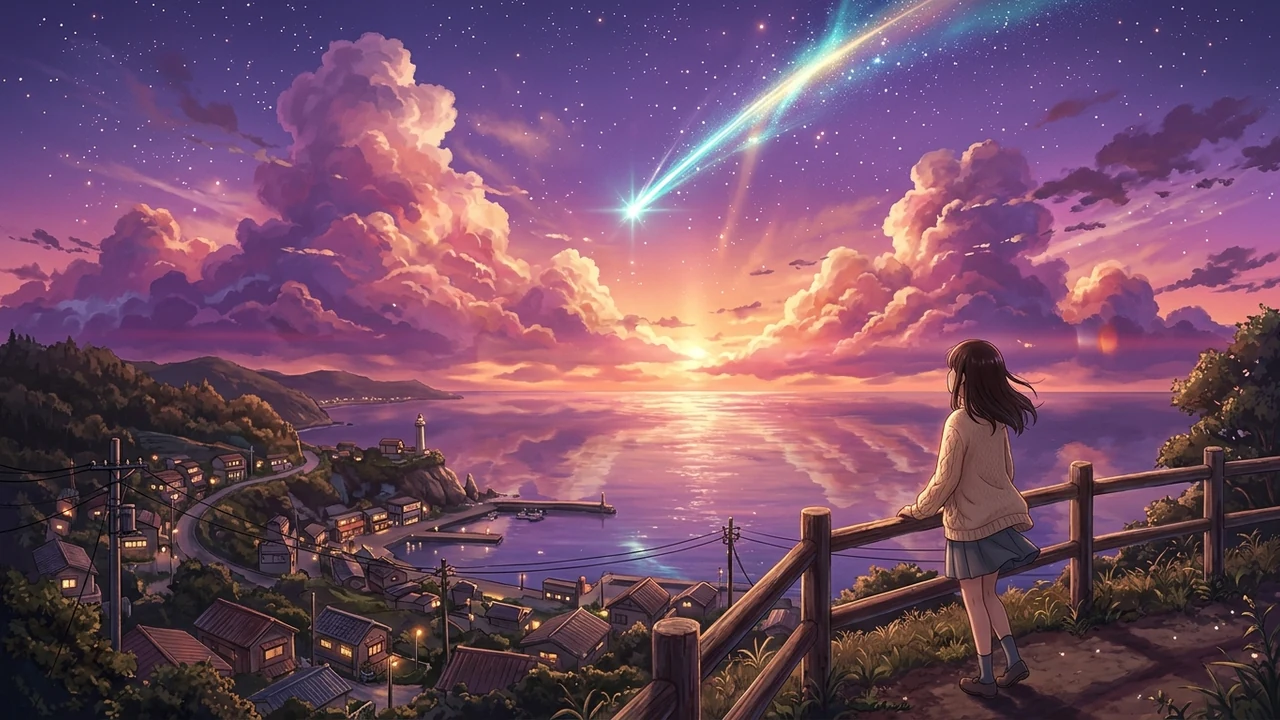
Modern aesthetic anime illustration thrives on emotional stillness, luminous atmospheric perspective, and tactile background artistry. Whether you are curating vertical phone wallpapers, designing lo fi music stream visuals, storyboarding visual novels, or building calm moodboards, typing vague phrases like cute anime scenery into an image generator almost always yields flat digital airbrushing with oversaturated neon skin tones.
What separates authentic studio quality anime art from generic outputs is deliberate medium and lighting vocabulary. Theatrical Japanese background painters construct mood through specific physical techniques: Nicker poster color gouache washes on cold press cotton board, optical bloom around twilight streetlamps, crisp two tone cel shadow boundaries on characters, and layered cumulonimbus cloud horizons. If you enjoy vintage VHS cel grain, explore our dedicated retro 90s cel animation prompt collection, or pair these outdoor landscapes with our warm lo fi anime bedroom interior prompts. Below are 10 completely original, studio tested aesthetic anime formulas built for Midjourney Niji 7, ChatGPT, and Google Gemini.
10 Original Aesthetic Anime Scenery & Character Prompts
Every prompt below has been individually rendered and verified for vertical 3:4 portrait framing. You can copy any prompt directly or swap the trailing aspect ratio parameter to 16:9 when creating desktop monitors and YouTube study banners.
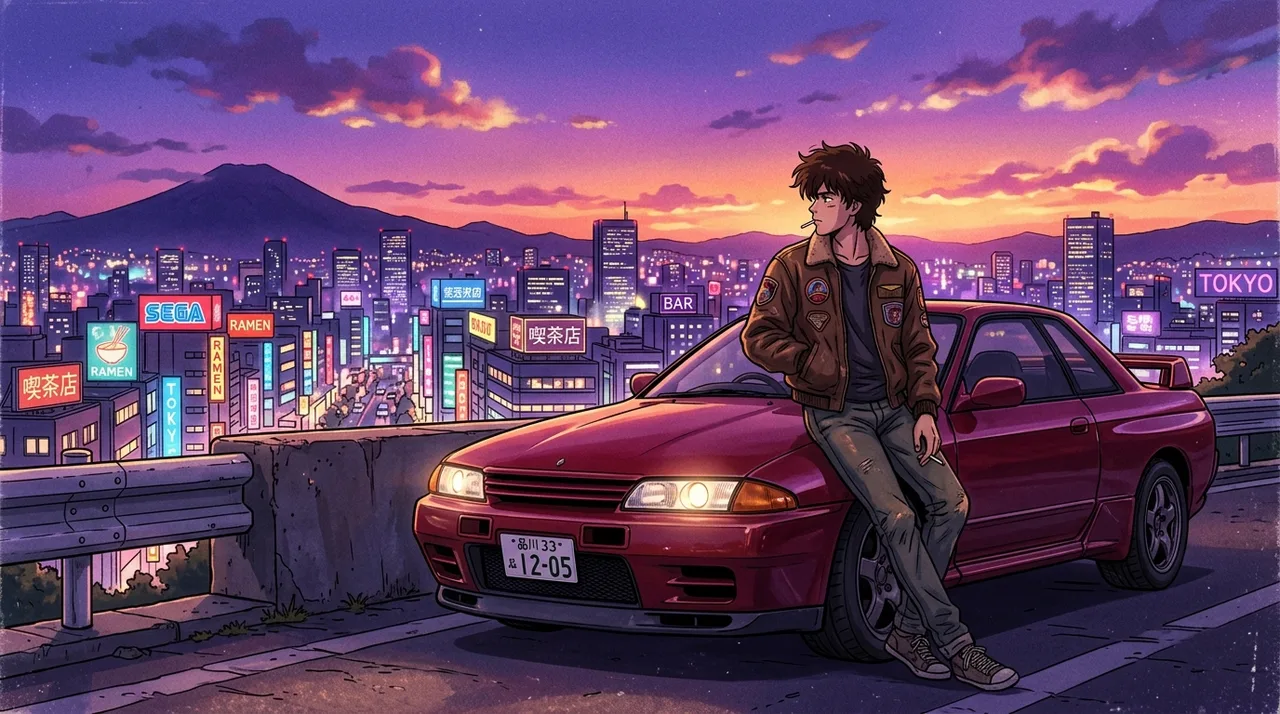
1. Makoto Shinkai Twilight Overpass and Cumulus Sky
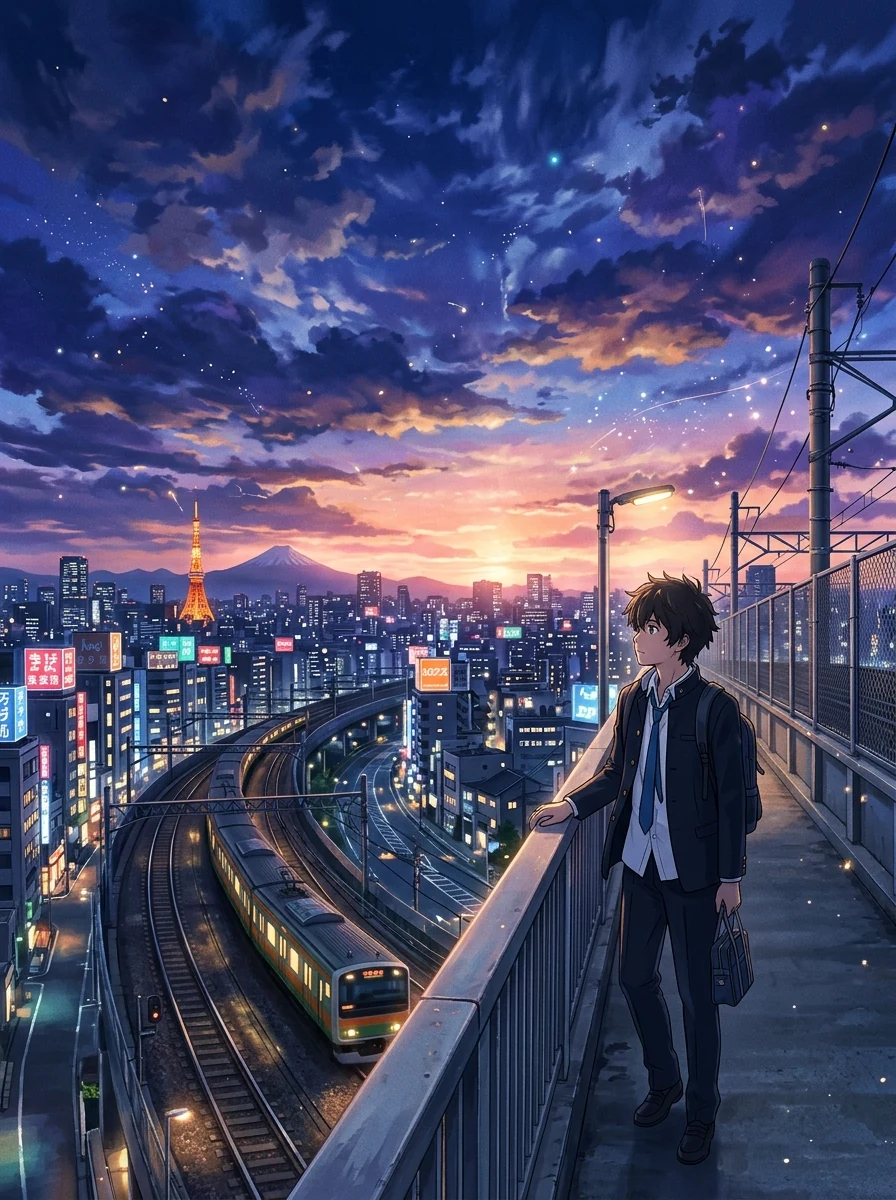
The signature look of theatrical modern anime rests on dramatic scale contrast between an intimate human silhouette and an expansive sky dome. Specifying violet and molten amber cumulonimbus cloud banks alongside warm railway sodium lamps below establishes dual color temperature depth. In Midjourney Niji 7 and Google Gemini, pairing crisp character linework with painterly sky brushwork keeps the portrait sharp while allowing clouds to glow naturally.
2. Sunlit Meadow Stone Cottage Bakery in Watercolor Gouache
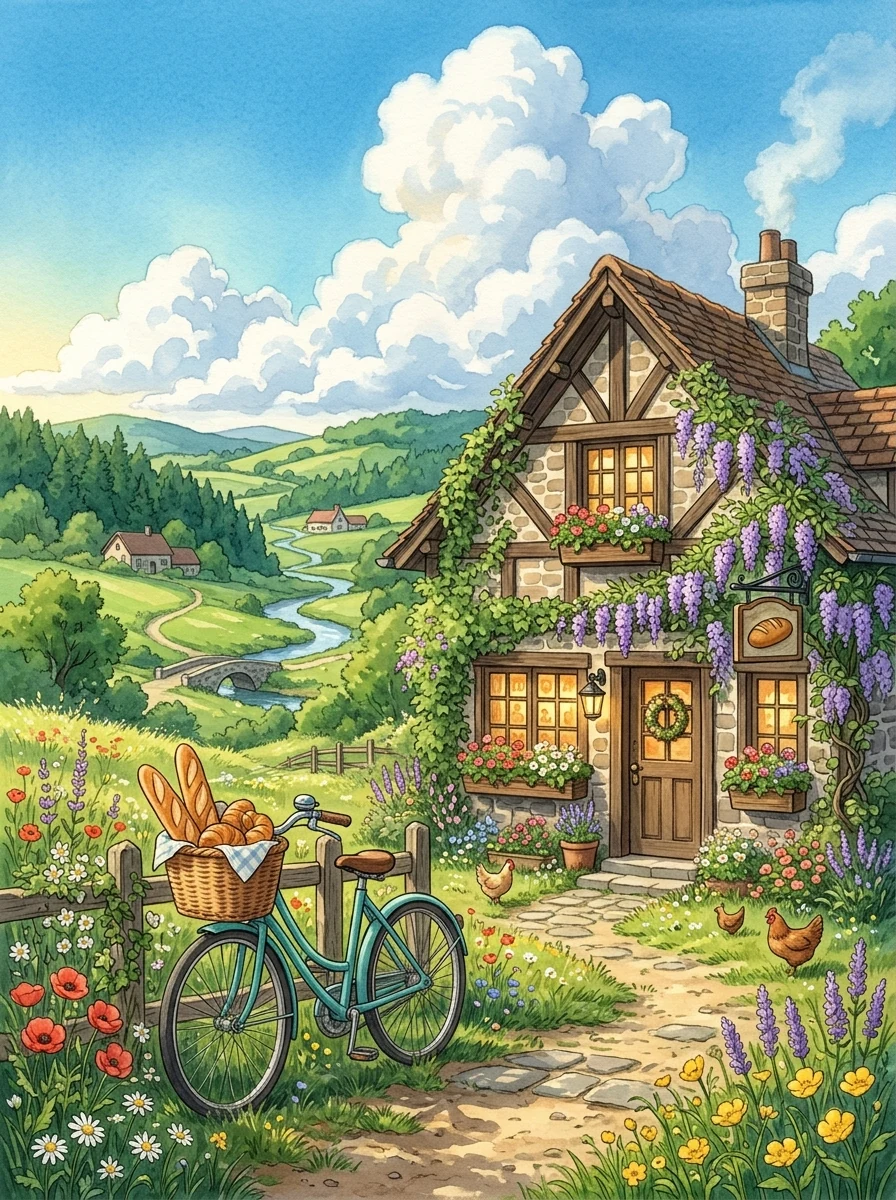
Traditional Japanese animation background studios built their timeless pastoral warmth using Nicker poster color gouache on heavy cotton illustration board. Calling out poster color gouache, visible matte brush grain, and wisteria draped stonework steers generative models away from sterile digital gradients. Warm interior tungsten light glowing through small timber windows anchors the viewer eye inside the lush green meadow composition.
3. Pastel Spring Kyoto Sakura Electric Tramway
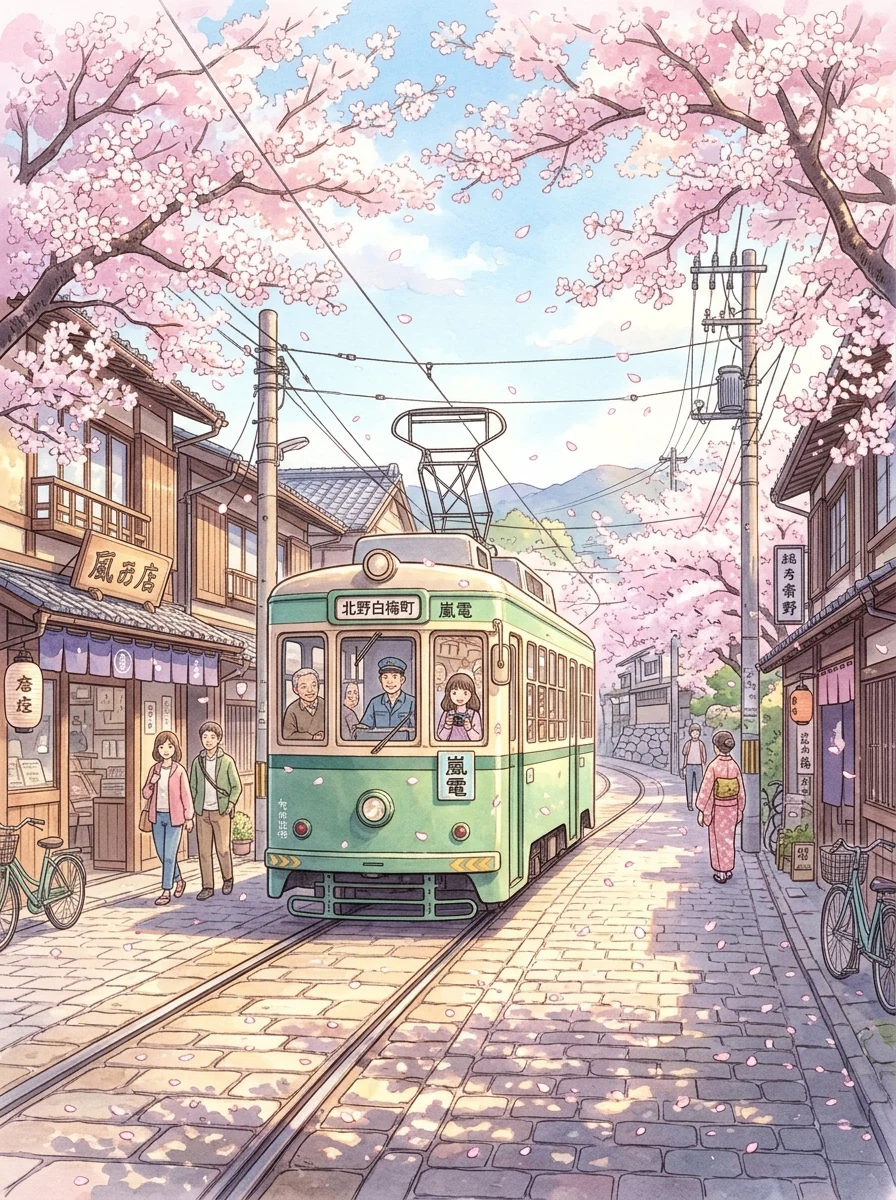
Overhead tramway catenary wires, sunlit sakura petals, and mint green enamel paint form one of the most beloved color triads in modern slice of life illustration. Notice how the prompt balances soft blush pink blossoms against cool mint metal and warm golden afternoon pavement bounce light. That complementary green and pink harmony prevents cherry blossom scenes from turning overly monochrome.
4. Cozy Lo Fi Apartment Rooftop Stargazing Terrace
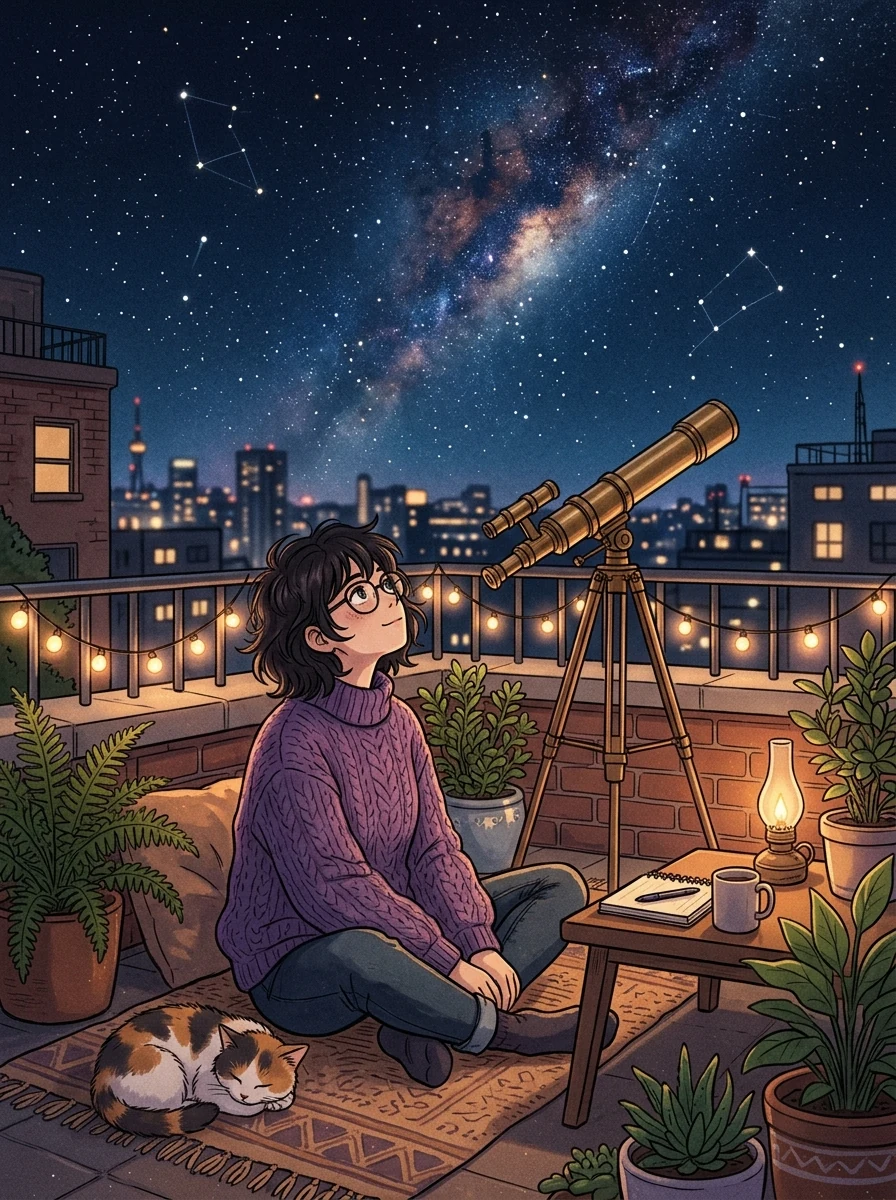
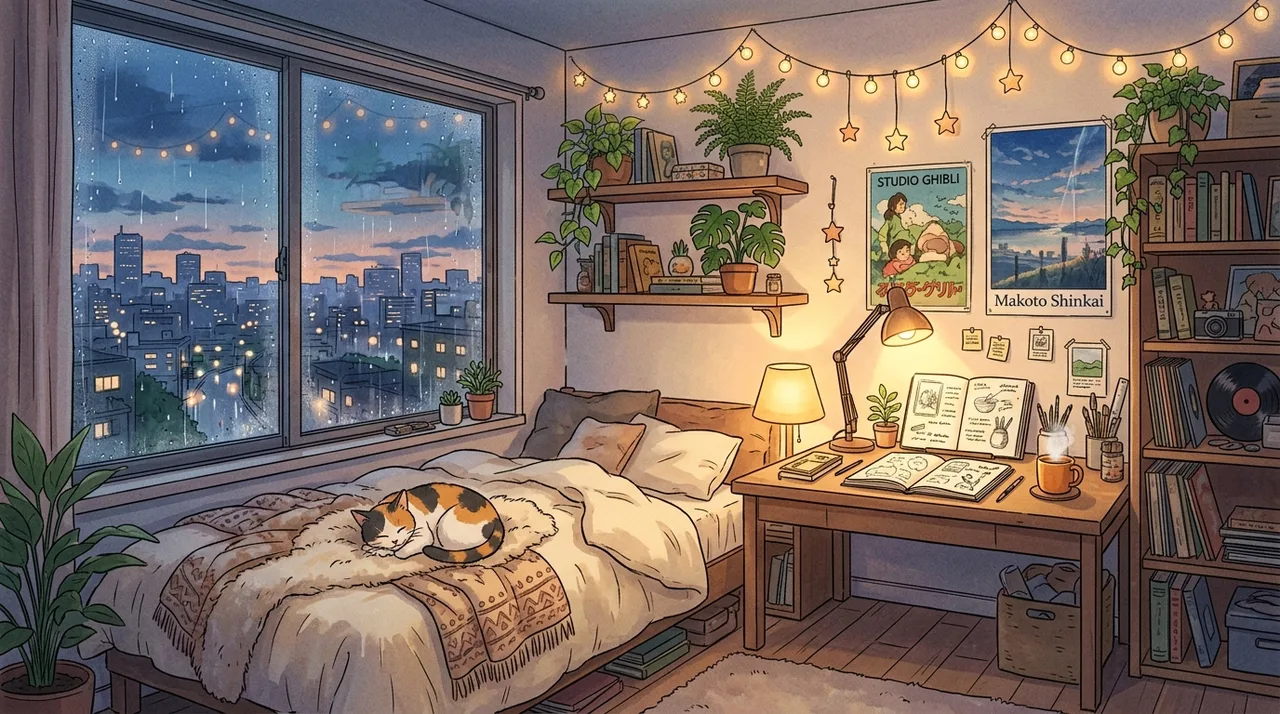
Successful nocturnal lo fi anime compositions rely on localized warm light islands set against deep indigo night skies. Warm fairy bulbs and potted foliage create an inviting foreground sanctuary while the brass telescope directs upward visual flow toward the Milky Way band. Including a resting calico cat on textured woven fabric adds quiet storytelling charm ideal for vertical study playlists and lockscreen art.
5. Rainy Afternoon Botanical Wooden Cafe Corner
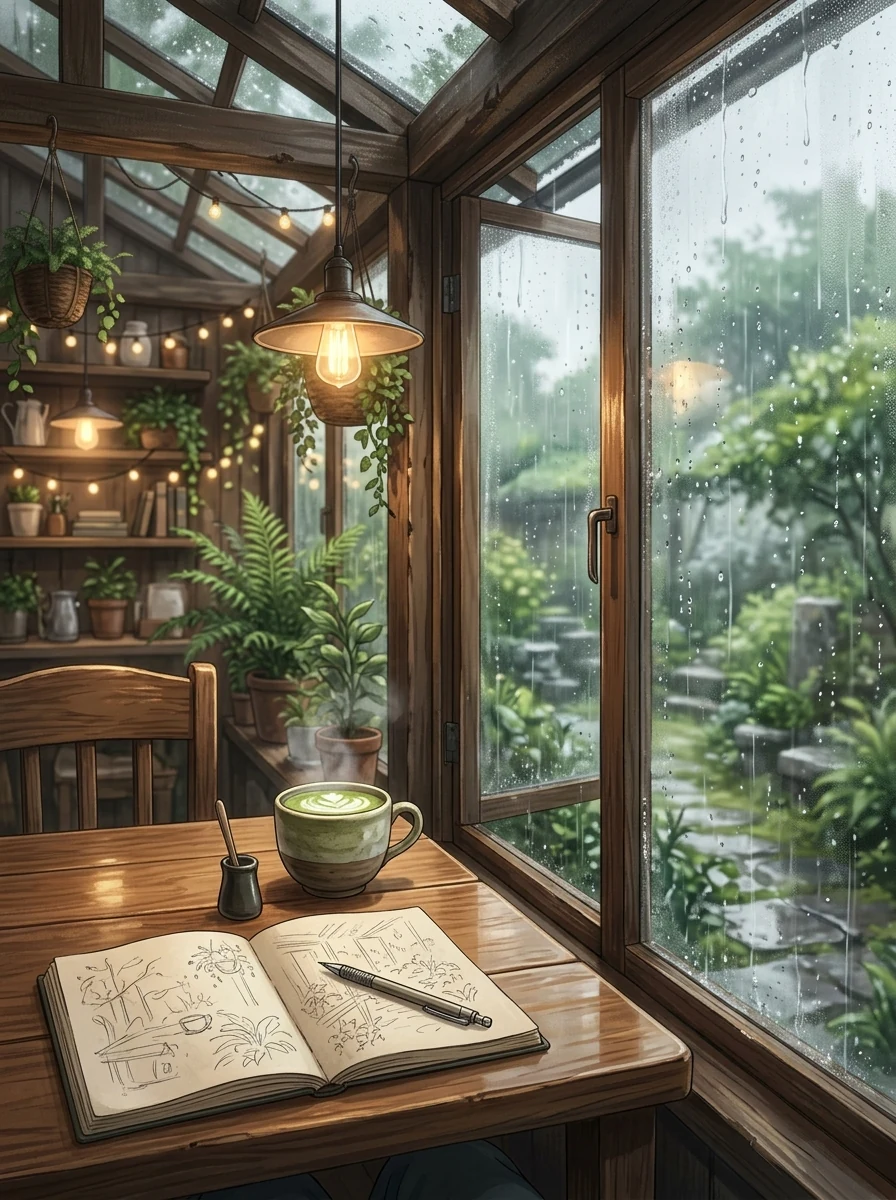
Kyoto Animation cinematography is celebrated for subtle optical halation, shallow depth of field on foreground tabletop objects, and believable wet glass refraction. Prompting oak wood grain, ceramic glaze reflections on a matcha cup, and out of focus garden ferns behind raindrop covered glass produces remarkable tactile intimacy without needing a central character portrait.
6. Sparkling Kamakura Ocean Seawall Summer Bicycle Ride
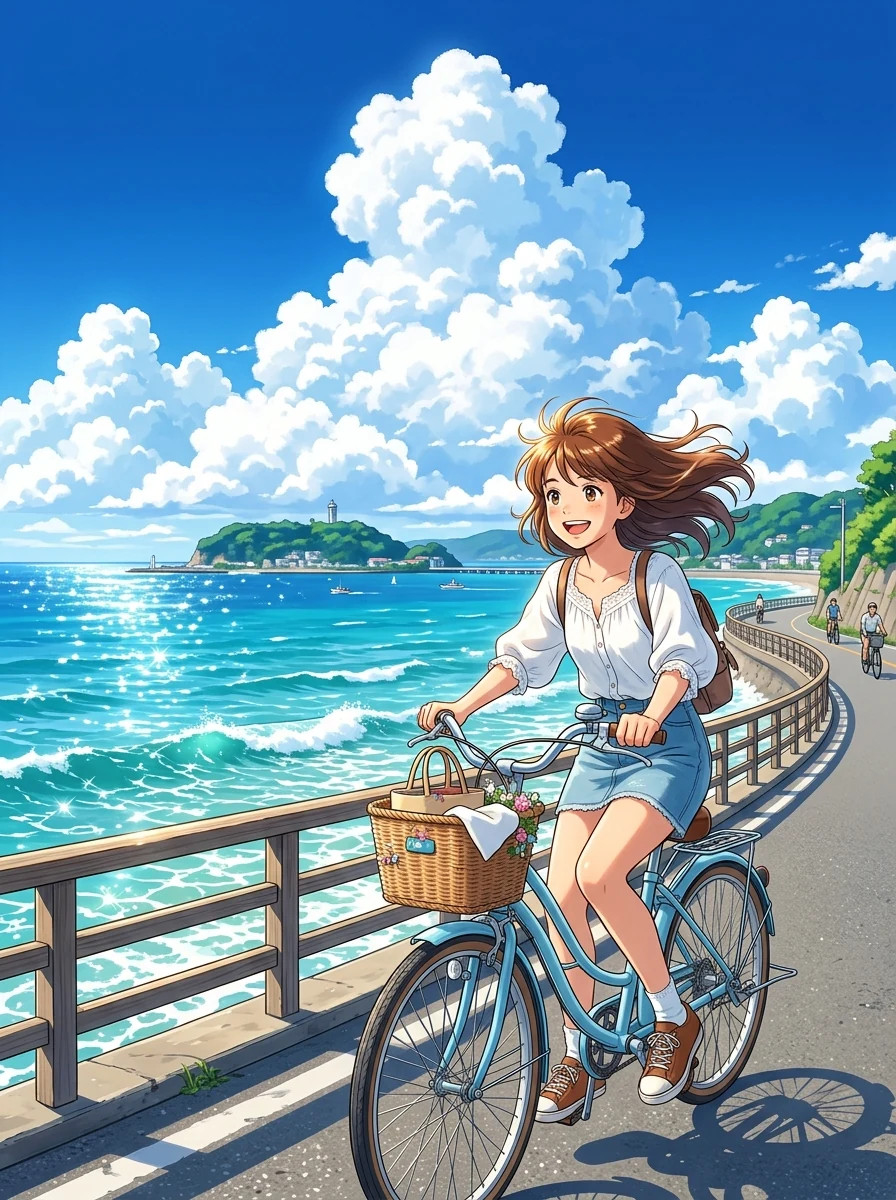
High key summer anime scenes thrive on crisp shadow edges and dazzling water specular highlights. Rather than muddy midtones, specifying vivid cerulean sky, bright white cumulus towers, and turquoise sea glints reproduces the unmistakable vibrancy of coastal Shonan and Kamakura animation sequences. Windswept hair strands sell natural forward motion across the seawall.
7. Ethereal Bioluminescent Lagoon Torii Gate at Moonrise
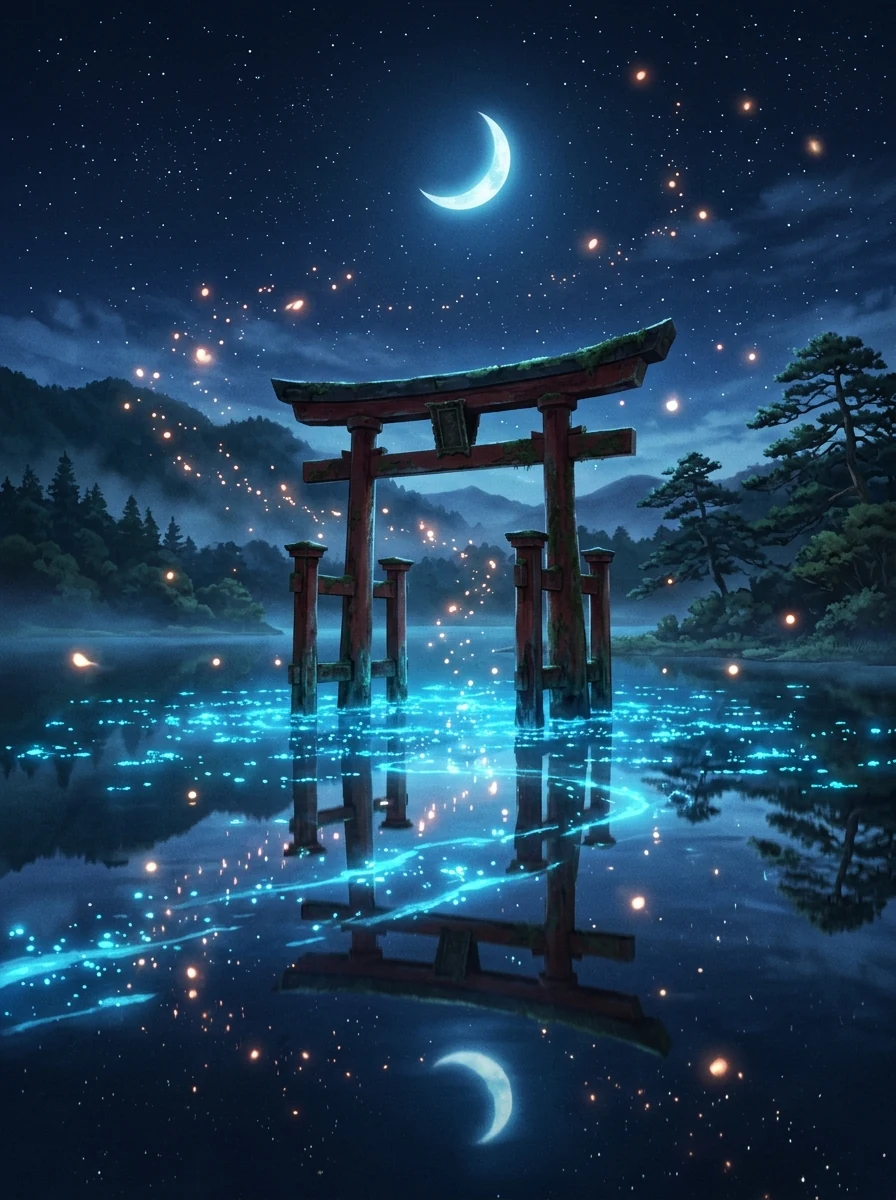
Mirror water symmetry paired with cyan bioluminescence and warm vermilion lacquer delivers striking visual contrast on OLED phone displays. Keeping the lagoon surface calm allows the crescent moon and glowing ripples to double vertically in the reflection plane, giving ChatGPT and Midjourney a clean geometric anchor.
8. Crimson Autumn Momiji Maple Bridge and Stone Lanterns
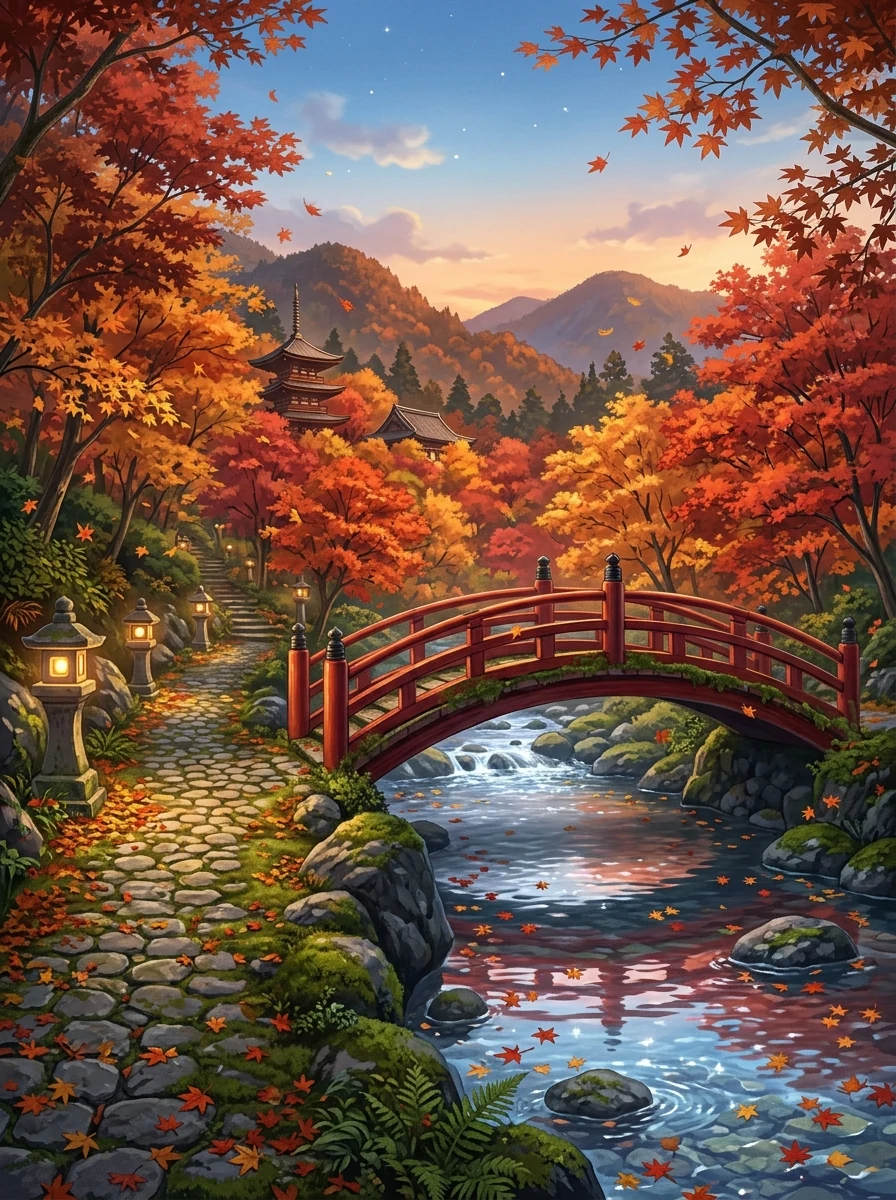
Autumn mountain shrine paths showcase warm analogous palettes ranging from saffron gold to deep vermilion maple leaves. Placing glowing stone lanterns along cool mossy boulders introduces subtle temperature separation so the scarlet canopy never overwhelms structural depth along the footbridge.
9. Sunlit Celestial Cloud Conservatory and Spiral Library
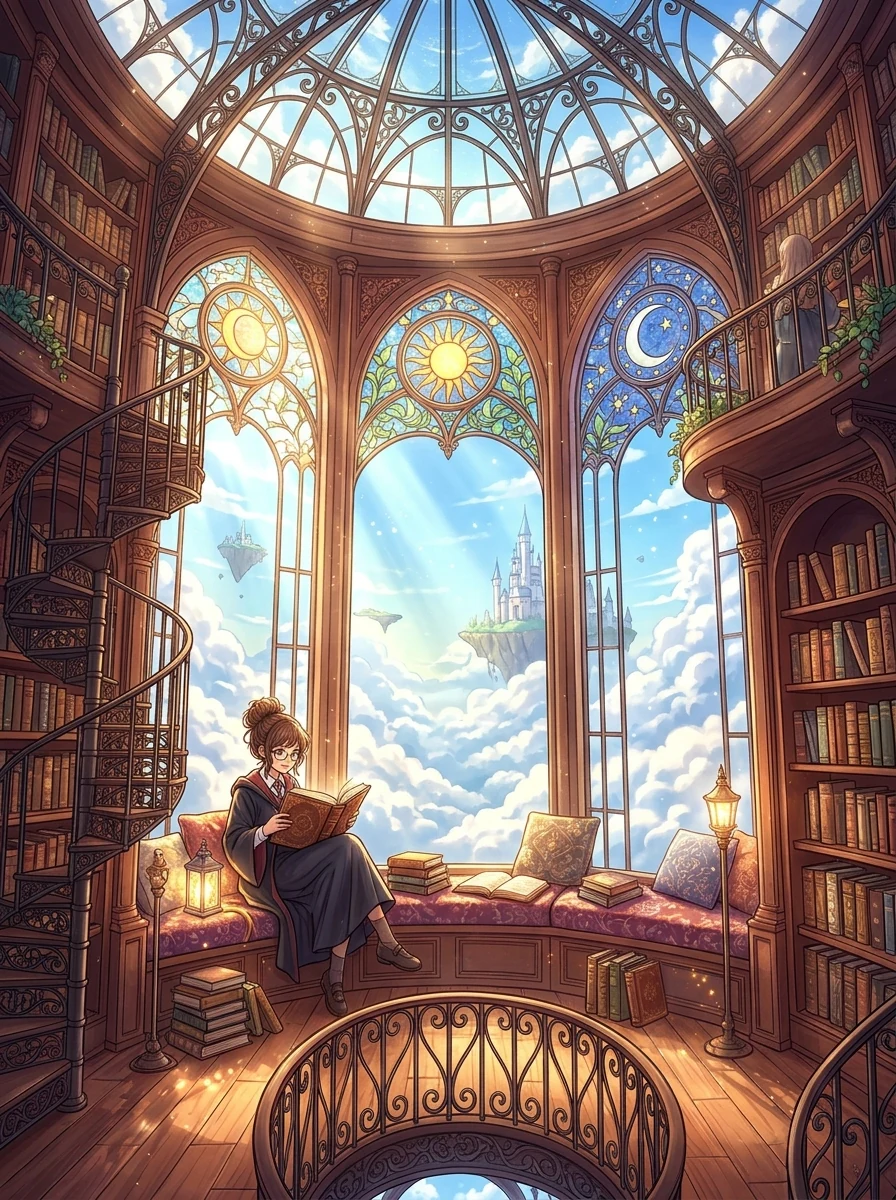
Architectural fantasy interiors look breathtaking when volumetric Tyndall sunbeams cut diagonally across dark mahogany shelving. Framing floating exterior cloud banks beyond tall arched windows blends cozy academic solitude with boundless sky fantasy, while a single reader on a velvet window cushion provides human scale.
10. Tranquil Misty Bamboo Forest Morning Tea Pavilion
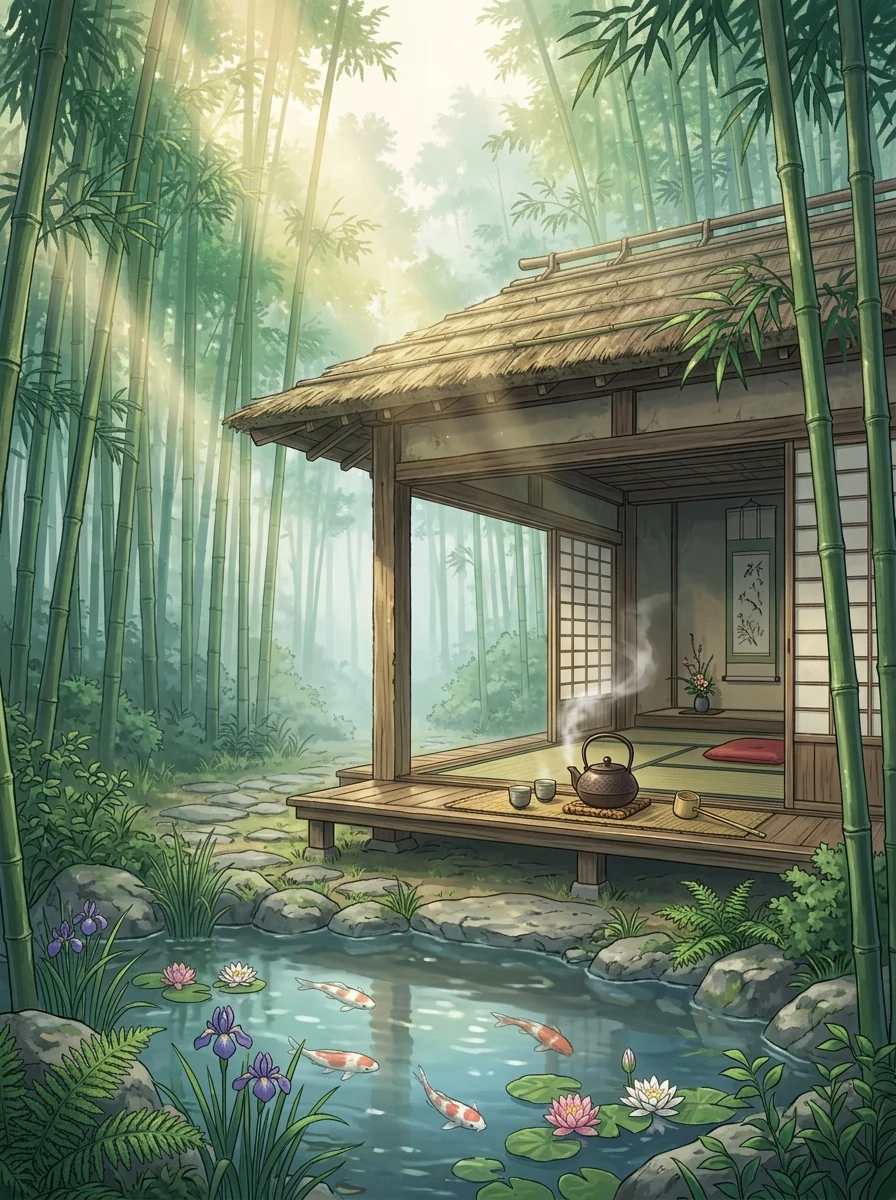
Layered atmospheric mist between foreground bamboo culms and distant grove silhouettes creates effortless depth separation. Soft golden dawn rays grazing woven tatami straw and rising tea steam bring meditative stillness to the final frame, ideal for minimalist desktop and tablet setups.
Color Scripting and Gouache Sky Layering in Anime Art
Behind every unforgettable anime wallpaper lies a disciplined three plane background hierarchy: a tactile close foreground prop, an architectural midplane where human life unfolds, and an expansive atmospheric sky plane that governs emotional tone. In traditional Tokyo background ateliers, painters lay down an underwash of cobalt or warm magenta before building opaque cumulus highlights with flat bristle brushes. When translating this craft into text prompts, naming the exact pigment behavior transforms flat gradients into living clouds.
Instead of asking simply for a pretty sunset sky, anchor three distinct vertical color zones within your sentence. Describe warm saffron and rose horizon haze near the treeline, transition through violet twilight midtones, and crown the upper frame with deep ultramarine zenith sky. Adding micro phenomena such as faint contrails catching last sunlight, distant railway signal lights, or tiny floating dust motes near sunlit windows gives the diffusion engine concrete spatial landmarks that prevent muddy blending.
Equally important is shadow temperature discipline. Beginners frequently allow AI models to shade anime clothing and stone walls with pure neutral grey, which immediately drains warmth from pastoral and slice of life scenes. Authentic theatrical anime shadows carry cool periwinkle blue or soft lavender tinting during daytime, shifting toward rich teal when paired with warm amber tungsten interior lamps at dusk. Including explicit shadow hue cues alongside warm rim highlights creates the unmistakable luminous glow associated with high budget Japanese theatrical features.
Calibrating Niji 7 vs ChatGPT and Google Gemini
Each leading image generator interprets anime terminology through a distinct training lens, so adapting a few structural tokens per platform produces noticeably cleaner artwork. Midjourney Niji 7 is purpose built around Japanese illustration weights and responds directly to concise comma separated art direction phrases followed by the niji flag. When working inside Niji 7, keeping stylize values moderate around 150 to 250 preserves delicate gouache paper grain without overcrowding quiet sky negative space with excessive ornamental filigree.
ChatGPT and Google Gemini rely on conversational natural language encoders that thrive on complete spatial sentences rather than shorthand parameter flags. When pasting any of the ten formulas above into Gemini or ChatGPT, simply omit the trailing double dash flags and write out your desired framing in plain words such as vertical three by four portrait illustration. Conversational models excel at complex narrative placement, such as positioning a steaming matcha cup to the left of an open watercolor sketchbook while keeping wet garden ferns softly blurred outside a rain streaked windowpane.
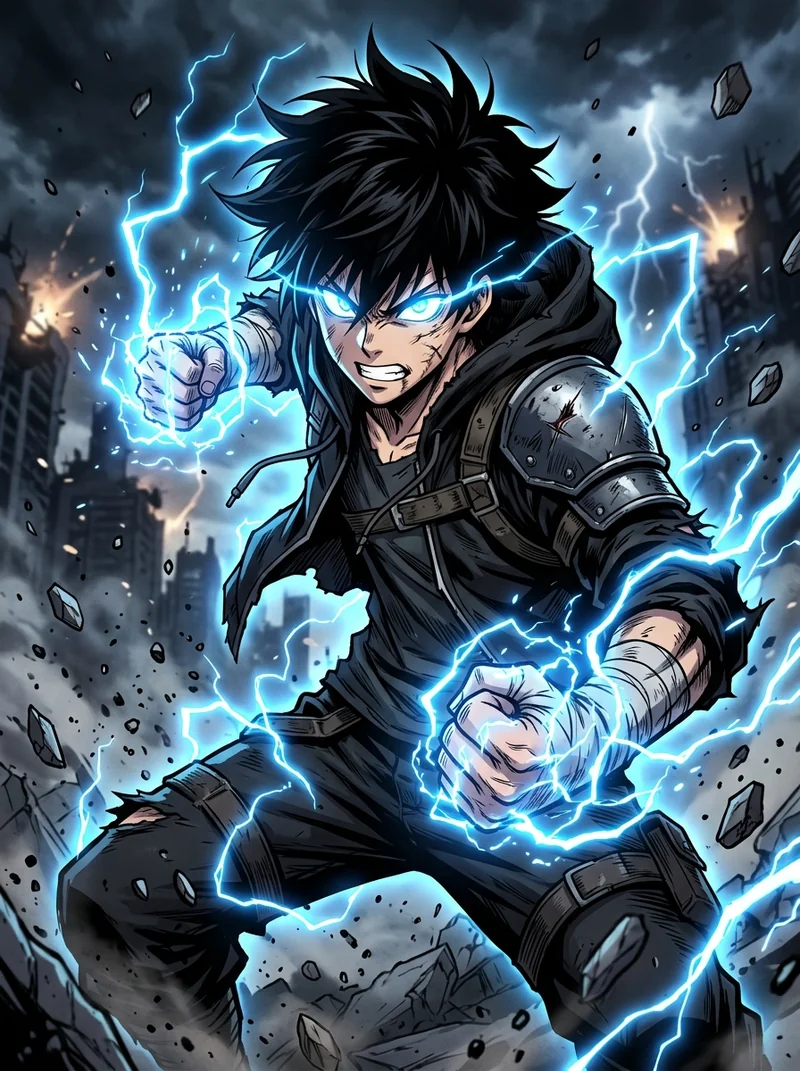
For creators who also experiment with character turnarounds and stylized action framing, you can combine the environmental lighting syntax from this page with our Midjourney Niji character design formulas or explore darker gothic architecture in our dark fantasy anime illustration guide.
Solving Common Anime Prompting Mistakes
The most frequent issue creators encounter when generating aesthetic anime scenes is accidental glossy 3D doll rendering, where skin and foliage look like shiny vinyl toys rather than 2D animation cels. This happens whenever prompts mix photographic camera brand names or Unreal Engine lighting buzzwords with anime tags. Never combine DSLR lens names like 85mm f1.4 or octane render with 2D anime prompts. Instead, express optical depth through traditional animation compositing terms: multiplane camera depth, soft foreground bokeh blur, painted gouache backdrop, and crisp inked character cel layer.
A second pitfall is visual overcrowding. Packing fifteen competing props into one cafe table or rooftop terrace forces the generator to shrink every object until line weights turn messy. Limit each composition to two or three hero storytelling elements, such as a brass telescope, warm string lights, and a sleeping calico cat, while leaving at least forty percent of the canvas open for sky, mist, calm water, or sunlit wall texture so the artwork can breathe.
Frequently Asked Questions
Describe three clear layers in natural sentences: the traditional medium such as hand painted watercolor gouache background with crisp 2D cel shaded characters, the specific time of day lighting such as blue hour twilight or golden afternoon sunbeams, and two or three grounded slice of life details like drifting sakura petals, a steaming ceramic matcha cup, or warm fairy lights.
Use 3:4 or 9:16 vertical portrait framing for smartphone lockscreens, Pinterest pins, and Instagram stories because vertical height showcases towering cumulonimbus clouds and architectural spires. Switch to 16:9 widescreen landscape when creating desktop monitor wallpapers or lo fi music stream backdrops.
Remove any photographic camera brand names or 3D rendering tags from your prompt, and explicitly specify 2D hand drawn cel animation, matte poster color gouache background, and delicate inked linework. In Midjourney Niji 7, you can also append negative exclusions for 3d render, cgi, glossy skin, and airbrush.